
In an age where information travels faster than ever before, the role of the journalist has become both more complicated and more critical. News no longer waits for the evening bulletin. It breaks on social media, spreads through WhatsApp groups, trends on X, and reaches millions before a newsroom has even convened its editorial meeting.
For veteran journalist and Newzroom Afrika anchor, Xoli Mngambi that reality has fundamentally reshaped what it means to sit behind the desk.
“People often already know what happened before we get on air,” he says. “The real value now is helping audiences understand why it matters.”
It is a distinction that speaks to the evolution of journalism itself. The modern anchor is no longer merely a messenger of events but an interpreter of complexity — tasked with connecting facts to consequences, context to headlines, and stories to the lives of ordinary people.
In a media landscape increasingly driven by speed, he remains committed to something less fashionable but infinitely more important: accuracy.
The pressure to be first has become one of the defining tensions of modern newsrooms. Yet for him, journalism remains rooted in a principle that was instilled early in his career — verification before publication.
“News is a team sport,” he explains. “The audience sees the anchor, but behind every broadcast are producers, writers, researchers and editors working to ensure the information is correct. I’ve always believed it’s better to be right than to be first.”
It is a philosophy that feels almost radical in an era where misinformation often outruns the truth.
Over the course of a career spanning some of South Africa’s most consequential moments, Xoli has reported from the frontlines of political upheaval, national elections, community tragedies and historic turning points. Yet the stories that have left the deepest mark are not necessarily the ones that dominated headlines.
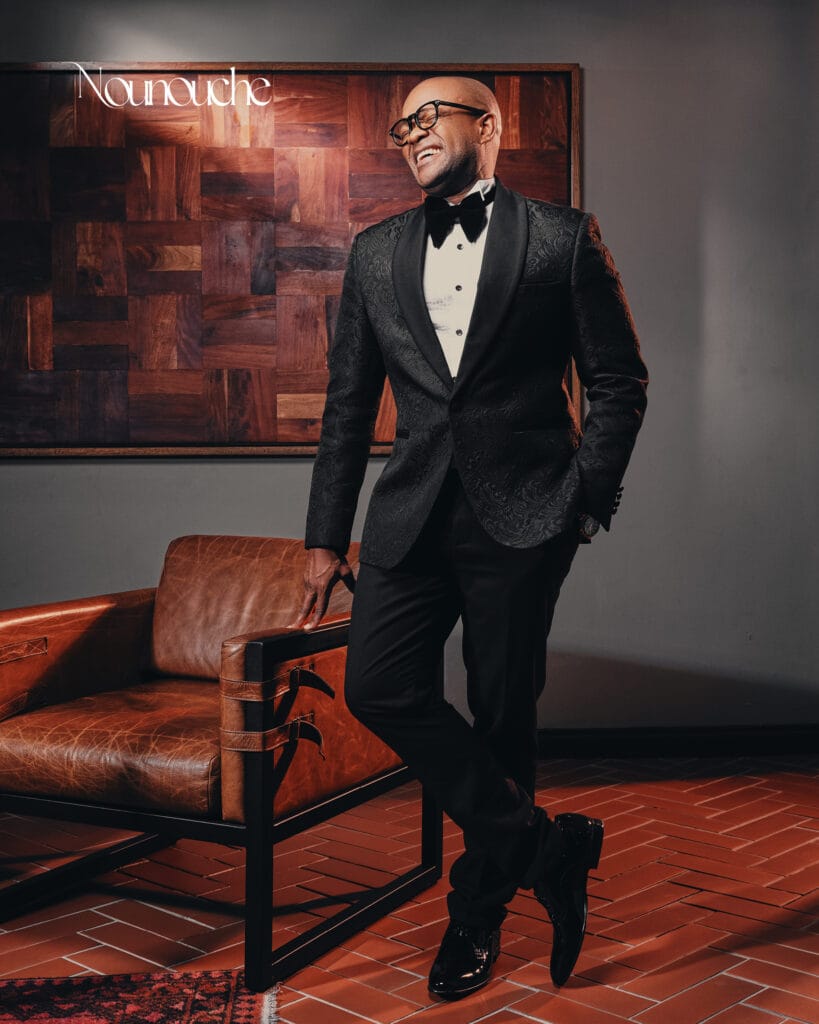
The political assassinations that plagued KwaZulu-Natal and Mpumalanga remain etched in his memory, particularly the murder of municipal speaker Jimmy Mohlala — a story Xoli continues to follow years later as justice slowly unfolds through the courts.
But nothing prepared him for Marikana.
Being present during the massacre transformed his understanding of journalism in ways no classroom or newsroom ever could.
“It was the first time I had witnessed people losing their lives while I was there,” he reflects. “I had covered protests before, but never a situation where people were actively being killed. That stays with you.”
The experience served as a reminder that journalism is not simply about documenting history; it is often about witnessing humanity at its most vulnerable.
That humanity continues to shape his reporting today.
When devastating floods recently swept through the Eastern Cape, he found himself speaking to families desperately searching for missing loved ones. In those moments, he says, people often turn to journalists not only for information but for hope — believing they may hold answers, however small.
Those encounters reveal a truth often overlooked by audiences: journalism is as much about trust as it is about facts.
Years after first covering the Jimmy Mohlala story, he recently interviewed the family again. What struck him was not just that he remembered them, but that they remembered him.
“There is a relationship that develops when people allow you into the most difficult moments of their lives,” he says. “It reminds you that our responsibility is to make sure those stories are not forgotten.”
That sense of responsibility extends beyond South Africa’s borders.
For decades, African stories have largely been filtered through Western narratives, often reducing a continent of more than a billion people to a collection of stereotypes. While he believes African media is making significant progress in reclaiming ownership of its storytelling, he argues the challenge is not only external.
“We often talk about changing how the world sees Africa,” he says. “But we also need to change how Africans see each other.”
It is a powerful observation. Reclaiming narrative ownership is not merely about representation; it is about recognising that events unfolding in Lagos, Nairobi, Harare or Kigali are not distant stories but chapters within a shared continental experience.
Navigating those stories requires another balancing act: maintaining objectivity while remaining deeply human.
As with any journalist, personal beliefs inevitably exist. The discipline lies in ensuring they do not shape the reporting.
“The moment I’m working, I put on my journalism cap,” he says. “My personal views cannot become part of the story.”
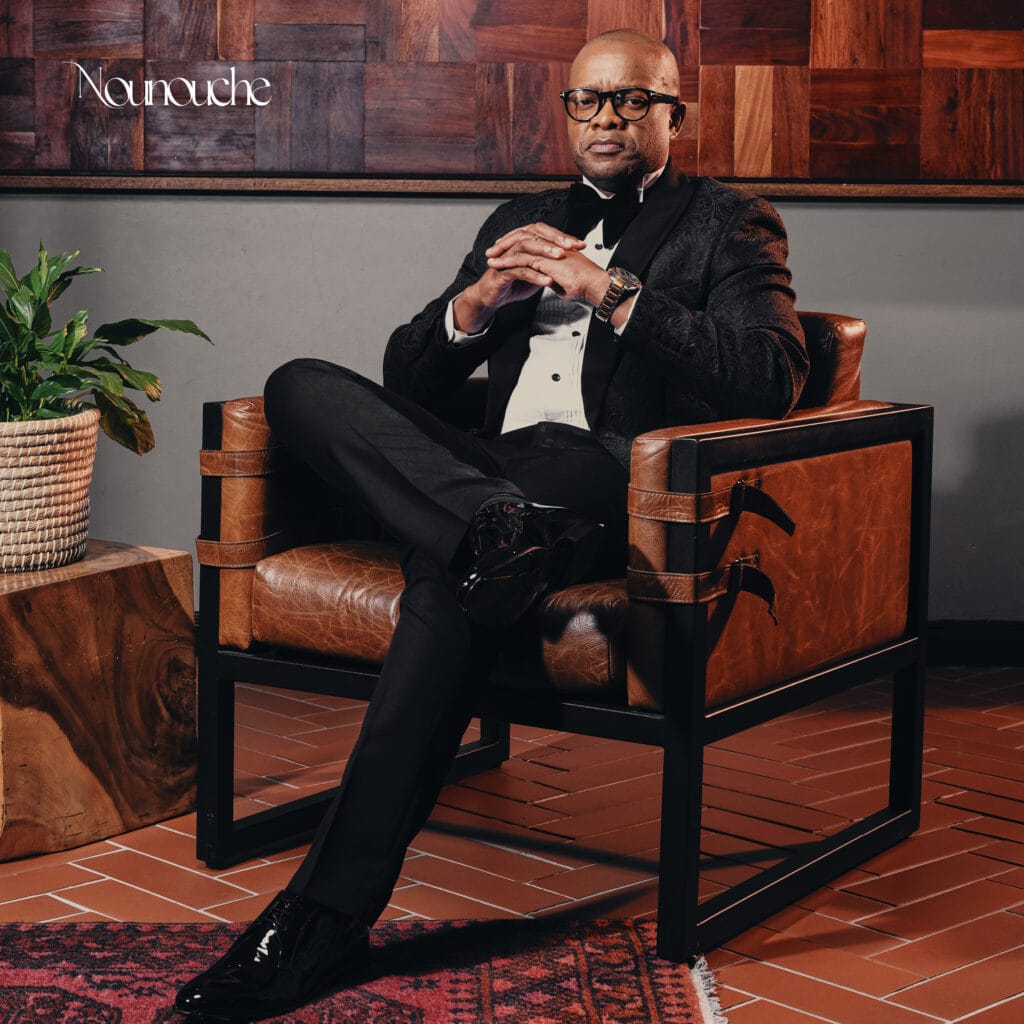
Yet empathy remains essential. Particularly in human-interest reporting, understanding people’s pain, fears and hopes is often what allows journalists to tell stories with dignity and depth.
In an era increasingly defined by personality-driven media, that commitment to professionalism has also influenced how he approaches public visibility.
While many broadcasters have embraced personal branding as an extension of their careers, he remains cautious about revealing too much of himself.
For years, he avoided publicly sharing even basic personal preferences, worried that audiences might interpret them as indications of bias.
“I don’t really see myself as a brand,” he says. “I’m a journalist. My responsibility is to tell stories and inform the public.”
It is a perspective that feels increasingly rare in a media economy where visibility is often mistaken for influence.
Yet perhaps his greatest contribution lies not in the stories he has covered, but in the example he hopes to leave behind.
When asked about legacy, he recalls advice from a journalism lecturer that has guided him throughout his career.
“Never believe your own hype,” he says with a smile.
The lesson remains as relevant today as it was then.
In an industry where recognition can arrive quickly and disappear just as fast, he measures success differently. Not by ratings, social media followers or personal acclaim, but by impact.
“The measure of a brilliant journalist is whether you’ve made a difference in someone’s life or community.”
At a time when trust has become one of society’s most valuable currencies, it is a reminder of what journalism was always meant to be: not the pursuit of attention, but the pursuit of truth.
And in a world drowning in noise, that may be the most important story of all.



No Comments