
At Sanctuary Mandela – a space built on the legacy of reflection, leadership and power – Tumisang Ndlovu arrived with the same presence she has become known for on screen: composed, measured and intentional. It is fitting that the cover celebrating seven years of Newzroom Afrika was photographed here. Few broadcasters embody the channel’s evolution quite like she does.
For nearly two decades, Ndlovu has navigated one of journalism’s most unforgiving environments: live television news. It is a world where facts compete against algorithms, where misinformation travels faster than truth, and where journalists are expected to deliver clarity while absorbing the emotional weight of a nation in real time.
Yet what distinguishes Ndlovu is not volume or spectacle. It is restraint.
“The latter part of almost 20 years as a broadcast journalist has fundamentally changed from the traditional time frames that allowed for ample research,” she says. “But it has encouraged a positive culture of being well versed in matters related to one’s area of reporting.”
In many ways, her philosophy represents a quiet resistance to the speed economy dominating modern media. While newsrooms race to break stories first, Ndlovu remains unwavering about the principle that has anchored her career: accuracy over immediacy.
“Verifying facts trumps being first to report on the story,” she says firmly. “This for me is an ethical and moral stance that is non-negotiable.”
That conviction feels increasingly radical in an era where social media has blurred the line between reporting, commentary and performance. The traditional authority once associated with television anchors has shifted dramatically, replaced by a fragmented ecosystem of influencers, citizen journalism and algorithm-driven outrage. But Ndlovu believes credibility has not disappeared, it has simply become harder earned.
“Social media sounds the loudest,” she explains. “Journalists now have to go the extra mile to ensure a distinctive difference to be seen as a trusted voice.”

For Ndlovu, that distinction is not built through personality cults or performative branding. In fact, she openly rejects the growing culture of personality-driven media that has reshaped the industry globally.
“Choosing to study journalism meant understanding that the profession is not about the individual and their views,” she says. “It is about the public you serve with information.”
It is a perspective that feels increasingly rare, particularly in a media climate where visibility is often mistaken for authority. But perhaps that is precisely why audiences continue to trust broadcasters like her. She understands that journalism, at its core, is not self-expression. It is public service.
Still, the emotional cost of that service is rarely visible to viewers.
Behind the polished delivery and composed facial expressions lies the burden of constantly processing national grief, political unrest and human tragedy without allowing it to fracture professionalism on air. Ndlovu speaks candidly about the mental endurance required in broadcasting – particularly during deeply sensitive stories.
“What is hardly understood from broadcasters is the mental strength required to keep going,” she says.
One story, in particular, has remained with her for more than a decade: reporting on the deaths of young siblings who suffocated after becoming trapped inside a deserted refrigerator.
“The pain struck me at the core,” she recalls. One of the children was the same age as her son at the time. “It made me even worse than a helicopter mom.”
Moments like these reveal the invisible emotional architecture behind journalism – the humanity audiences often forget exists beneath the title of “anchor.”
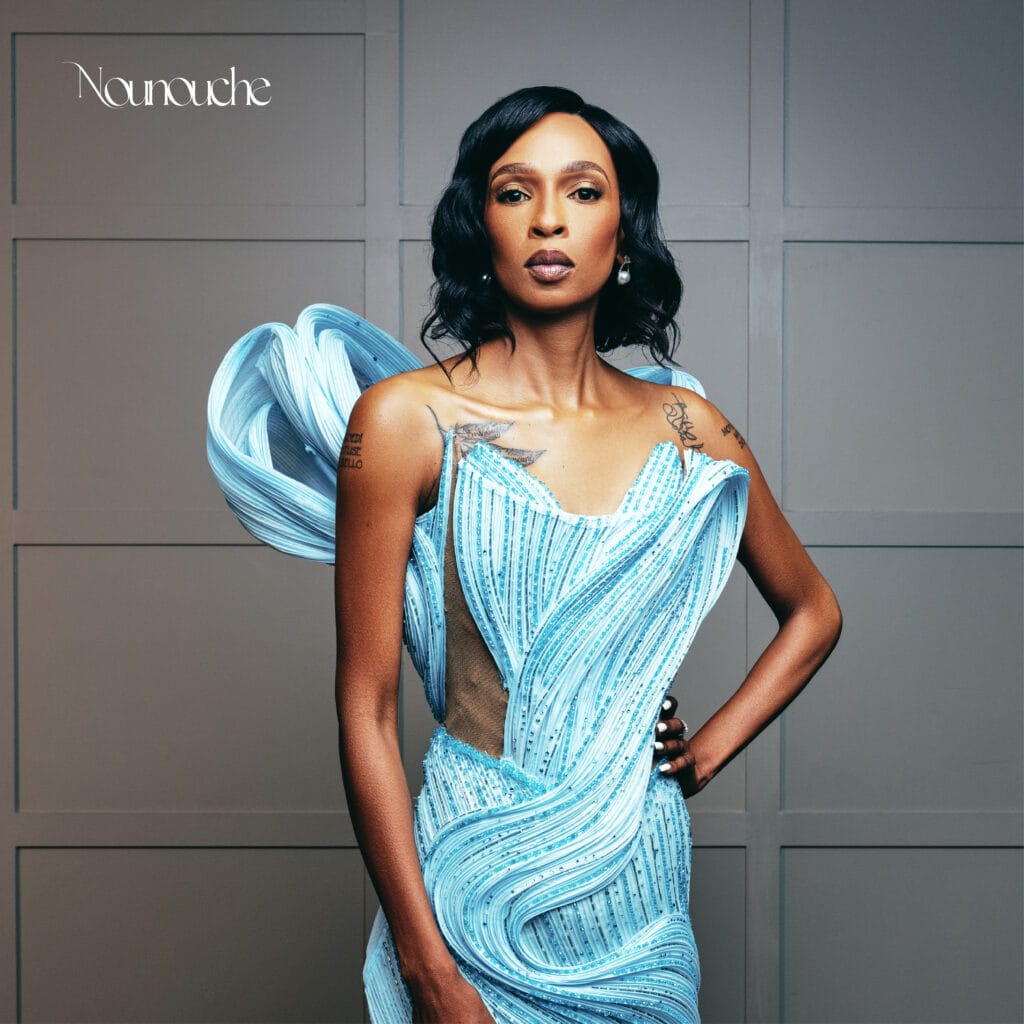
As one of the few young Black women in South African financial journalism, Ndlovu’s presence also carries cultural significance. In industries historically dominated by male voices and Western frameworks, representation is no longer symbolic, it is structural.
She believes African media is finally reclaiming ownership of its narrative on a global scale.
“In financial journalism, events like Mining Indaba and the Energy Summit have elevated the continent’s perspective globally,” she says. “Delegates from across the world participate in dialogue seeking to advance the African economy.”
That shift is mirrored within Newzroom Afrika itself, a newsroom she credits for prioritising stories that reflect the realities, tensions and complexities of South African society.
“The channel stands out for maintaining an ethos of articulating human interest stories,” she says. “Its aim of servicing a dynamic society translates into conversations that often spark national debate.”
Seven years after its launch, Newzroom Afrika has become more than a broadcaster. It has become part of South Africa’s daily rhythm, a trusted voice in a noisy age.
And perhaps that is what makes Ndlovu such a fitting cover figure for this milestone edition. Not because she demands attention, but because she understands responsibility. In a media era obsessed with disruption, she represents something quieter and ultimately more enduring: discipline, integrity and trust.
When asked about legacy, she hesitates slightly, almost uncomfortable with the grandeur of the word. But her impact is undeniable.
“Being among a handful of young Black female broadcasters in financial news remains a reminder that the door has been kicked wide open for others,” she says.
Not pushed slightly open. Kicked wide open.
And for the next generation watching closely, that may be the headline that matters most.


No Comments