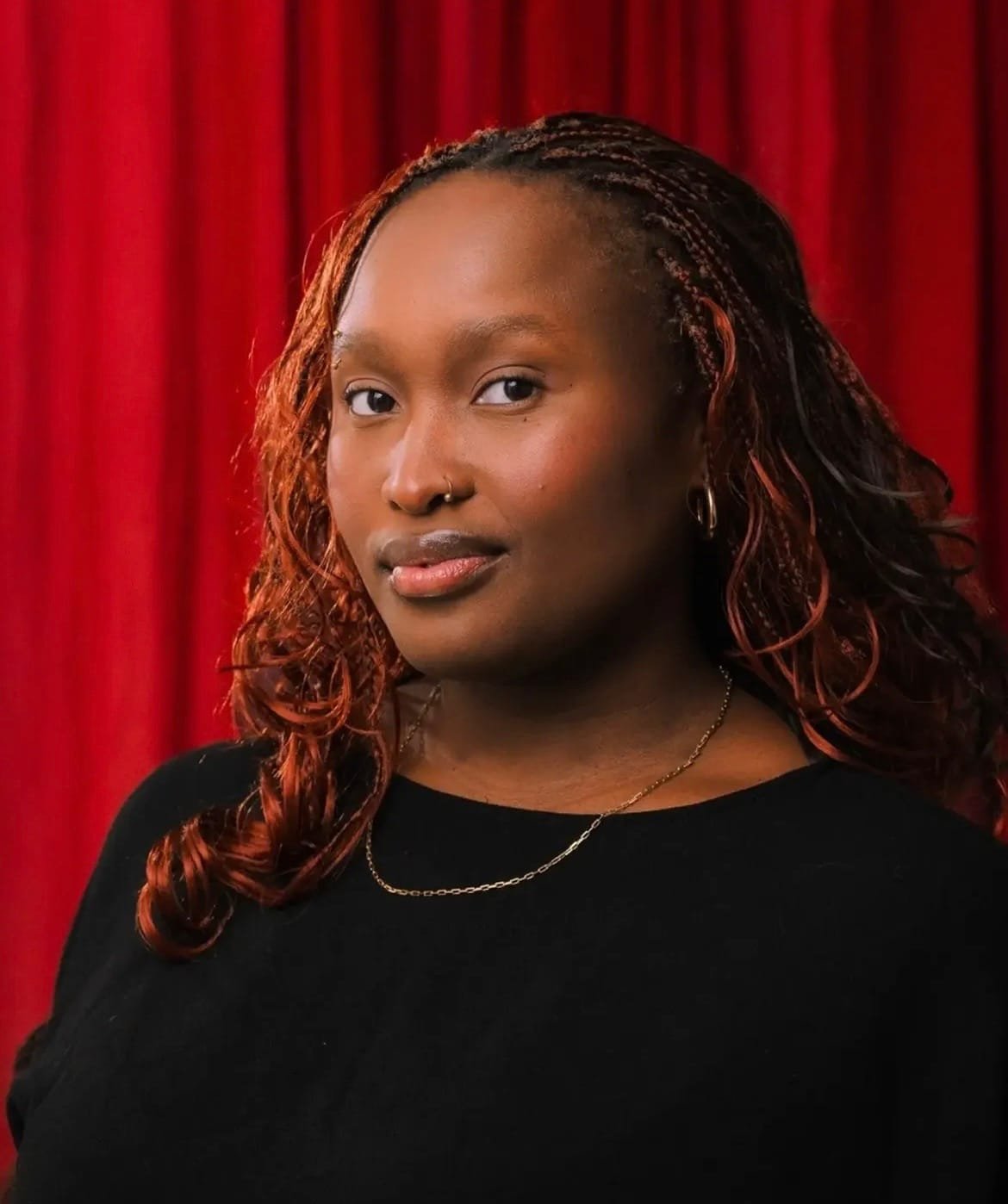
Sandulela Asanda talks about Black Burns Fast with the kind of passion and joy that’s impossible to miss. In the six months since it started screening, the film has played more than 25 festivals across Europe, the US, Asia and Africa, including an international premiere at the 2026 Berlinale and closing slot at BFI Flare’s 50th anniversary.
Born and raised in the Eastern Cape, Asanda started acting at eight years old, mostly in theatre. But the path from stage to screenwriter’s desk wasn’t a straight one. She went on to study law and economics at university, on a scholarship, a compromise struck with parents who wanted her to have something to fall back on first. “I feel like it’s the story of every, of most Black children, especially the creatively inclined,” she says, lightheartedly. It would be years, working as a producer, a festival hand, a programme manager for a screenwriters’ residency, before she circled back to the thing she actually wanted to do. “I was tired of watching people do the thing and I wanted to do it myself,” she says.
What she wanted to do, it turned out, was tell the story of Luthando, a high-achieving scholarship student at a prestigious girls’ boarding school whose life is upended by the arrival of a mysterious new student, Ayanda. Written by Asanda and produced alongside Cait Pansegrouw, whose credits include Inxeba and This Is Not a Burial, It’s a Resurrection, the film began as something much smaller and much more personal: a question Asanda couldn’t stop asking herself.
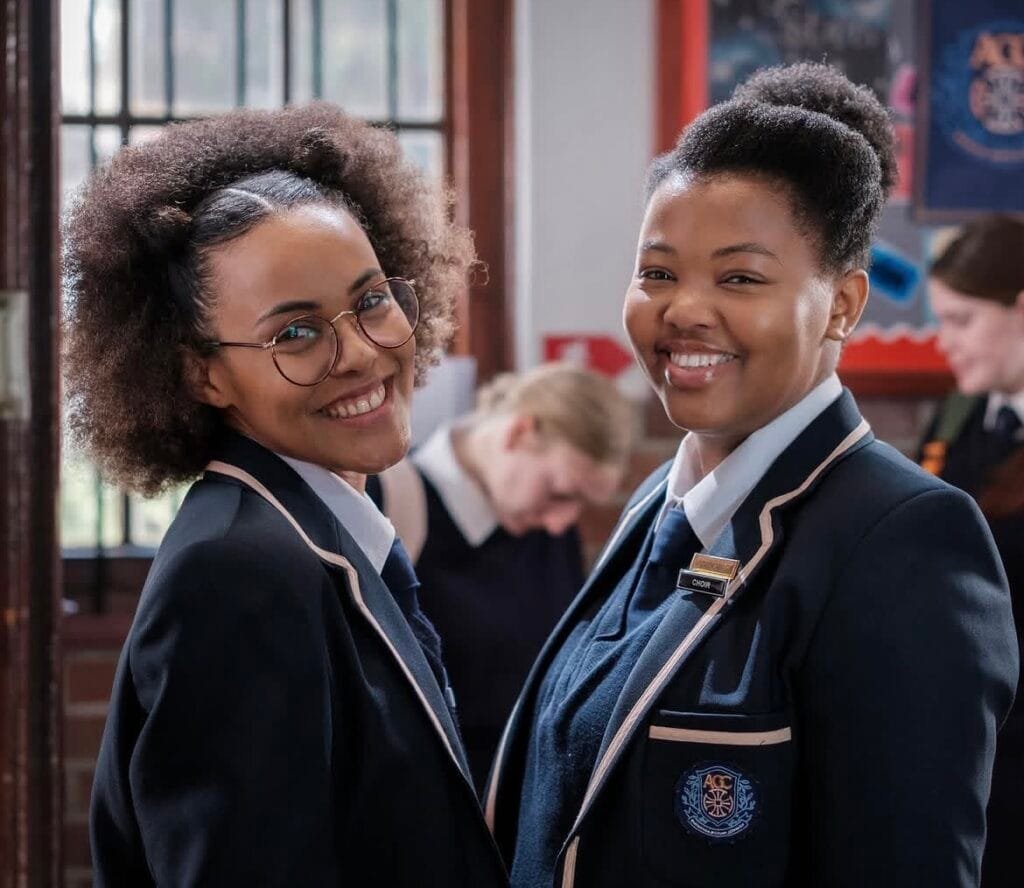
That question took root in mid-2020, a moment when Black students across the country were speaking out about their experiences in private and former Model C schools, the kind of formerly white institutions Asanda had passed through for most of her own schooling. She was also, by her own account, only a year or two removed from properly understanding her own queerness. “Thinking about high school at that time made me also think about, you always wonder, what were the signs looking back? Why didn’t you know this about yourself before?” she says. The answer, she came to realise, wasn’t that the signs hadn’t been there. It was that she’d had nothing to measure them against. “I didn’t have the images, I didn’t have the language, I didn’t have the representation, to be able to even know that this is how I was feeling, and this is what was happening inside of me.” What she did know, even then, was that something in her didn’t fit, not with her peers, and not with the culture of the school itself, and as a result, the shape of the film began to form. “Let me try and make the type of film that I needed when I was that age.”
It would have been easy, perhaps even expected, for a film like this to reach for pain. Queer coming-of-age stories so often do. Asanda made a different choice, and she made it early. “So many queer narratives lately, or not even lately, just like in general in the world, are so scary, they’re based on trauma, and I really didn’t want to do that, I didn’t want to replicate that,” she says. She still wanted to have a serious conversation but maybe the best way was through joy first. “I found that the best way to have these conversations is to kind of disarm people. That’s where the lighter approach, the comedy, comes in to do that. But then, at the same time, there are moments where things are not light, where things are serious, and you’re kind of forced to reckon with them”.
Given how rarely South African cinema has told this exact story, two Black girls, queer, in love, it might have been reasonable for Asanda to feel the pressure of being first. She insists she didn’t. “I didn’t necessarily feel that pressure. I just believed in it, and it’s what I wanted to do. I knew that there would be a desire for it, and that it was necessary in the world.” The pressure she did carry came from somewhere more familiar: herself. “I’m a bit of a workaholic, I’m a bit of a perfectionist, so I’ll be pressuring myself on delivering the best I can do, in any case.” Bringing Luthando and Ayanda into the world, she says, felt less like a risk and more like a reunion. “These are characters that we barely see. I know them so intimately, and so well, and I was really excited to bring them to the world.”
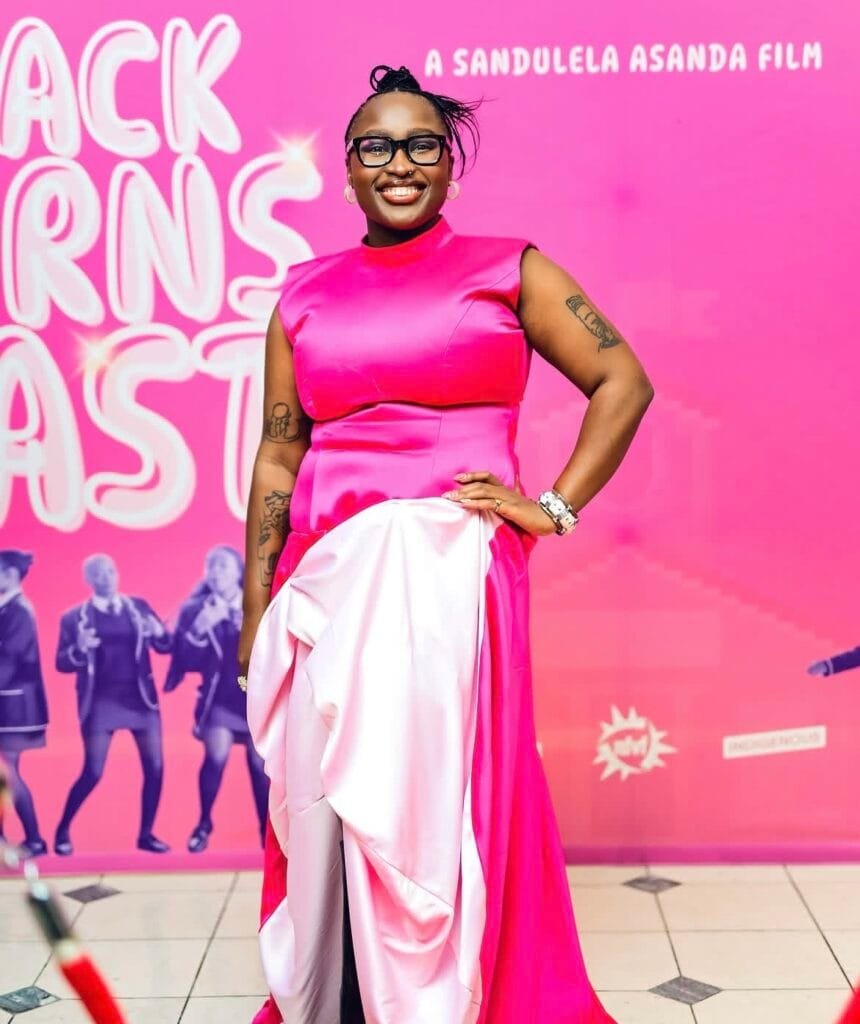
Much of the film mirrors the experience Asanda had while attending school. “I see a lot of myself in not only Luthando, but also in a lot of the girls in the film,” she says. “There’s a few storylines that I’ve put in that are very much like, I was there to see them happen, or they happened to me.” Other moments arrived later, borrowed from her life as an openly queer adult, and folded back into a story ostensibly about teenagers. Even the title is personal, born from a single, quietly devastating observation. “I wanted a title that would really reflect the story of the character,” she explains. To be a Black girl in these spaces is to live under constant, low-grade surveillance, over how you speak, how you carry yourself, how you’re perceived, and that surveillance has a way of ageing you before your time. “It also made me think of that scientific principle of how darker colours heat up faster than other colours. Black girls heat up, or they’re kind of forced to grow up faster than their peers, because they are darker, because they’re Black.”
On set, by her own account, Asanda found something rarer than a good shoot, she found collaborators willing to build with her rather than around her, cinematographer Pierre de Villiers among them, a returning collaborator from an earlier short film. “Most of the people that I worked with have been in the industry longer than me,” she says. “But at the same time, they were also so happy to meet me where I am and meet me where my vision was.” She never felt obligated to arrive with every answer already worked out. “I could say to people, okay, you know what, I don’t know, but let’s work through this together.”
Perhaps what has struck her most is how far the story has travelled beyond the audience she first imagined for it. “It’s given me more confidence in the sense to know that this is also a story that resonates so far and wide with people who weren’t even necessarily the target market that I was looking at when I started writing this film.” Critics abroad have taken notice too. BuzzFeed gave the film four out of five, praising its portrayal of Black queer isolation inside a conservative boarding school, while Attitude Magazine and Shadows on the Wall have both pointed to its colour, its wit, its refusal to look like anything that came before it.
Asked what she hopes young filmmakers, Black queer women especially, take from all of this, Asanda returns to a word that seems to sit at the centre of everything she believes. Expansiveness. “Representation is meant to be expansive. It’s meant to show you that you can be more than what you are.” Luthando, she’s quick to point out, isn’t defined solely by her queerness, but by everything else tangled up in her life alongside it, and Asanda hopes other young storytellers hold onto that same room to breathe, staying loyal to their own instincts even when financiers or gatekeepers suggest otherwise. As for what comes next for her, she’s in no rush to answer. “You only release your first film once, and I wanted to be present for that.” Still, something is already stirring, ideas she isn’t ready to name yet, across formats she refuses to be confined to. Television, perhaps. A musical. A play. “I’d rather let the story lead be more than anything else.”

No Comments