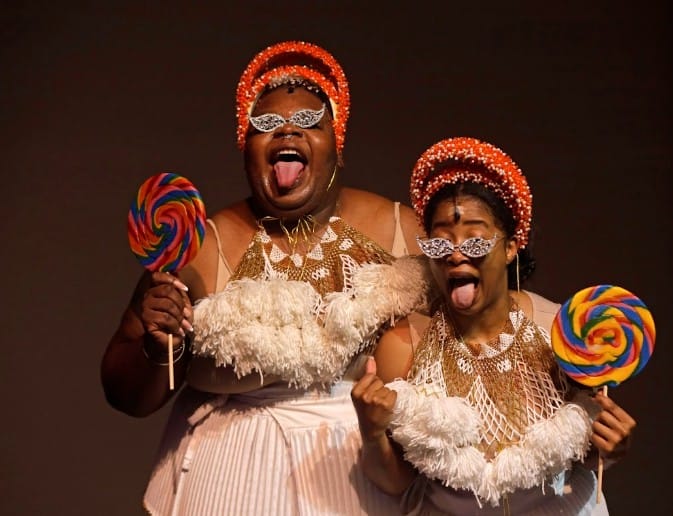
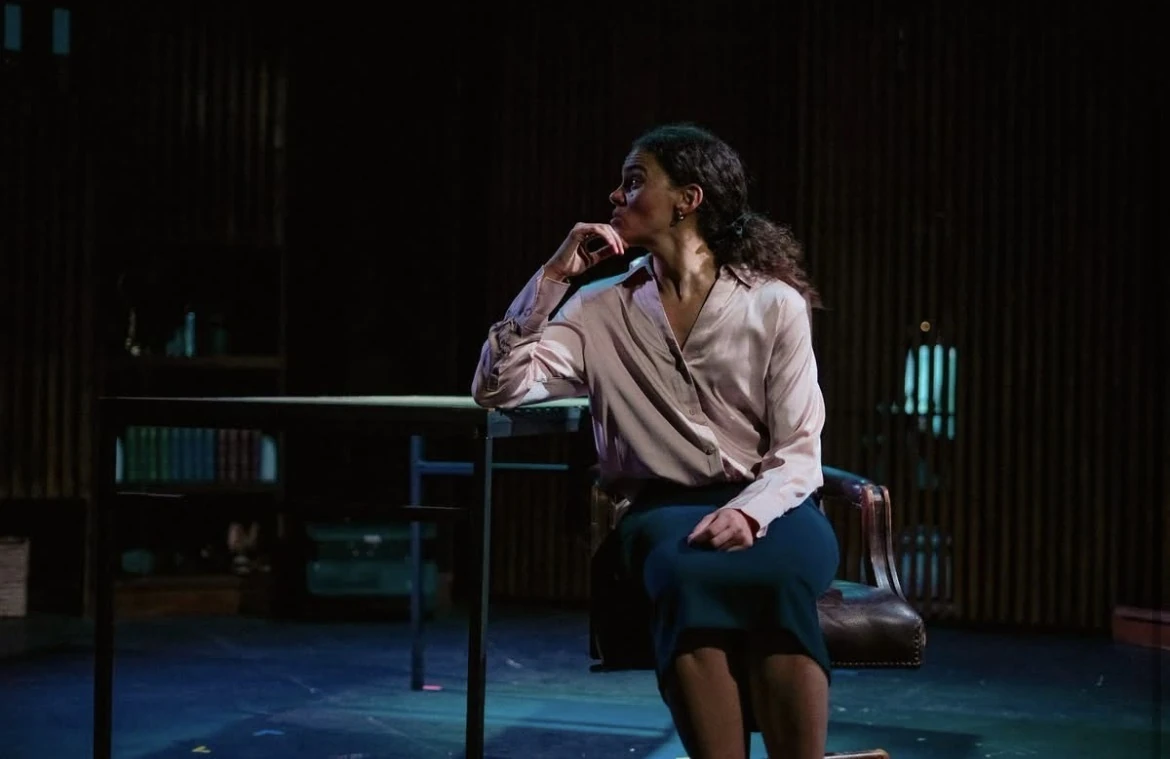
There’s an unmistakable scent of incense that welcomes audiences to the theatre before the performers in Dear Museum! The Truth of the Matter It Seems Everything Was Better When We Were Not Telling the Truth ascend the stage. In African spirituality, the colour red symbolises bravery and the blood of the ancestors, while white represents purity and divine connection.
These colours dominate both the set and most of the costumes worn by the performers, Albert Ibokwe Khoza and African Entertainer (Julia Burnham). The intentionality of the creative team with this colour scheme is initially clarified by the narration of teenage prophetess Nongqawuse, who was raised by her spiritually gifted uncle Mhlakaza after her parents’ passing.
In 1856, the young girl reportedly had a visit from spirits she may have believed to be her ancestors, who are said to have instructed her to deliver a message to her Xhosa people to kill all their livestock. These spirits told Nongqawuse that the killing of the cattle would be followed by the rise of dead ancestors who would bring abundant wealth. However, after the killings, the ancestors never arose and the people were cast into famine, which forced Nongqawuse to flee as her angry people began hunting her.
But who documented Nongqawuse’s story and how accurately were these events recorded? These two questions could equally be asked of museums, as the play probes whether these entities are imperial and colonial at their core.
The play examines the symbolism of museums from the perspective of the people tasked with being their custodians, relays what they represent for the people whose resources are on display and highlights the inequalities between these two parties. The performers stand back to back in the opening scene, as if to ask, “Who sits on the right side of history?”
“In forgiving your colonisers, I plead that you also forgive African people,” Khoza bemoans in the production, before highlighting the lingering impact of the 1884 Berlin Conference on Africa and the subsequent removal of artefacts from the continent.
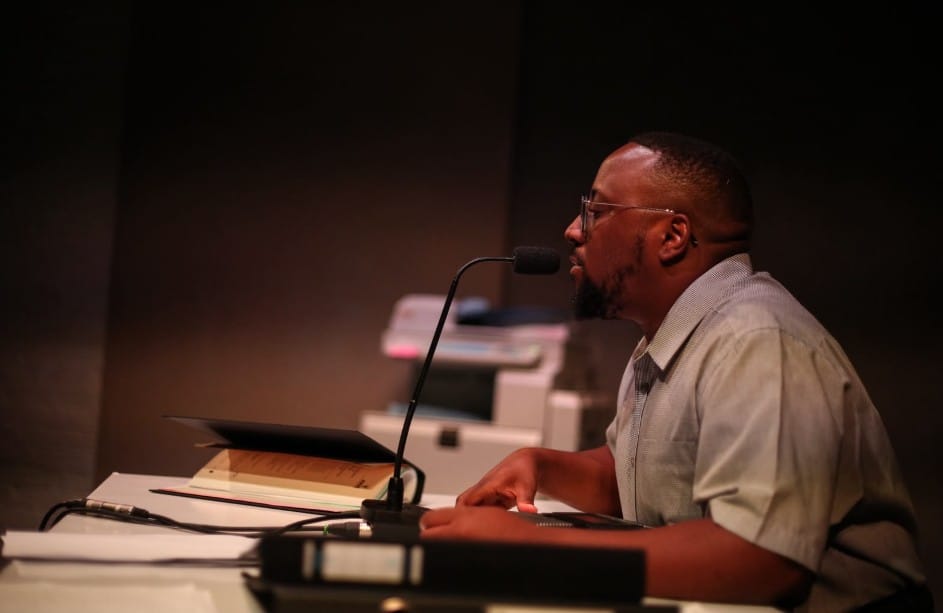
14 European nations and the United States assembled to strategise the regulation of this continent’s colonisation and determine how the colonising nations would trade. The production laments the erasure of indigenous African languages, the movement of artefacts, and how, more than a century later, African people need visas to visit these countries so that they can access their continent’s stolen artefacts.
I was glad to see Credo Mutwa in the visuals because, in my opinion, these conversations would be incomplete without his voice. Khoza unapologetically questions how history is taught to white kids in Spain, Germany, America, and other parts of the world today.
Are they given an honest account of the torture, concentration camps, the genocides carried out by King Leopold II and many others across various territories, the lobotomising of African kings and the sexually enslaved African women? The production describes the residual wounds of these atrocities as psychological, cultural, spiritual and socio-economic. The privilege of existing in an era when such shows can be staged without the threat of censorship, or even being completely banned, should not be taken for granted.
The play is not all doom and gloom, as Germany is commended for its 2022 decision to begin returning looted African artefacts. Towards the end, the performers carry brooms and are draped in white garments to emphasise the message of cleansing, rebirth and purification.
On multiple occasions while watching the show, I’m reminded of a previous interview with the Shaka Ilembe cast, who described the show as being so spiritual that ancestral spirits often manifested on set. I cannot imagine that Khoza and African Entertainer went from inception to rehearsal and performance without their own ancestors manifesting.
My biggest takeaway from this play is the jarring reminder that colonialism is not an African story; it is a global conversation. The Atlantic and Indian Ocean islands, Mexico, Peru, Jamaica and the Caribbean are some of the territories whose colonial history is highlighted. Dear Museum premiered in Germany in May before its African premiere at the NAF, where it ran until 28 June.
No Comments