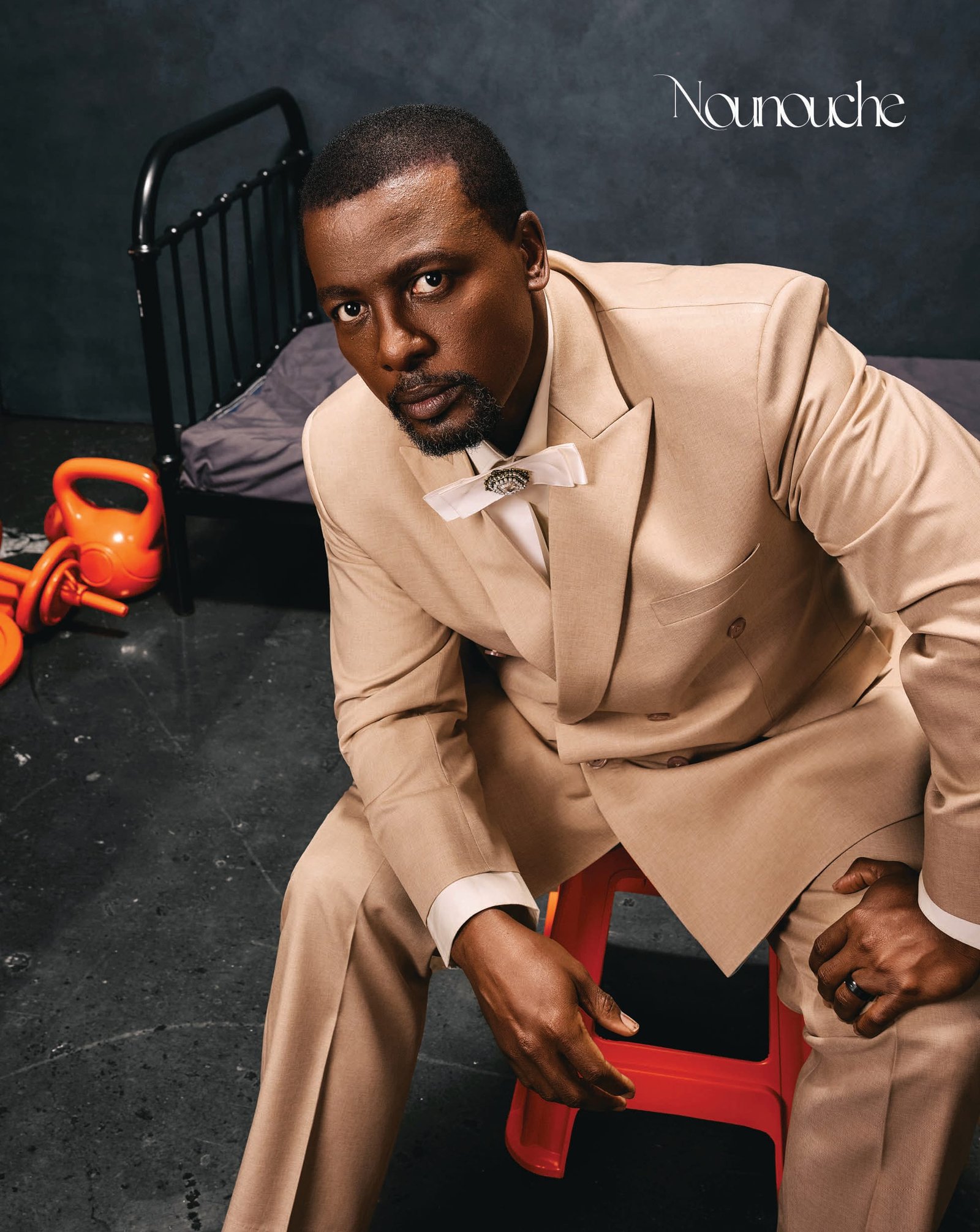
There are actors who perform a character, and then there are actors who disappear into one.
For Tony Kgoroge, returning to the screen in Netflix’s Umthetho was never simply about stepping back in front of a camera. After spending years immersed in directing and other creative work, the acclaimed actor found himself confronting a feeling he had almost forgotten: the nerves of being an actor again.
“I was literally having panic attacks,” Kgoroge admits, recalling the period before filming began. “I was like, ‘Oh my goodness, am I going to be able to do this?’”
It is a surprisingly vulnerable admission from a performer whose career has been defined by gravitas. But vulnerability is precisely what makes his return to Umthetho so compelling.
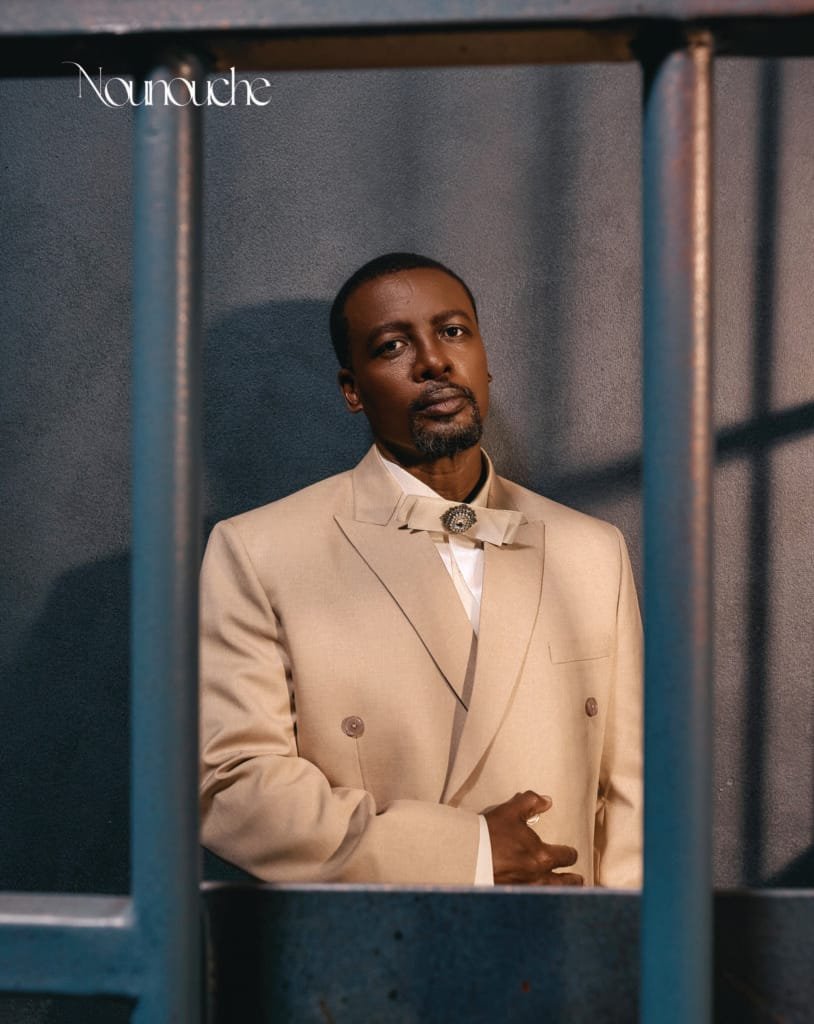
In the series, Kgoroge plays Moses, a prisoner navigating a world where morality is rarely clean, justice is complicated and survival often demands becoming harder than you want to be.
For Kgoroge, understanding Moses meant going beyond the script.
Finding Moses
The character presented a particular challenge because Moses exists in a reality Kgoroge had never personally experienced.
“I didn’t have a lived experience or know someone who has been in that situation,” he says.
So he researched.
He spoke to people who had lived inside the prison system and encountered stories that helped him understand the psychology, contradictions and survival instincts of men like Moses. One particular prisoner, a man Kgoroge refers to as Matoilu, became an important reference point.
He saw something of Moses in him: a man who had committed serious crimes but resisted becoming absorbed by prison gangs and the systems around him.
“That was my Moses,” Kgoroge says.
The research gave him a way into a character who is deliberately difficult to categorise. Moses is tough, strategic and capable of violence, but underneath that hardness is a man attempting, in his own way, to protect people and create some form of order inside an environment designed to strip it away.
“He’s trying to help,” Kgoroge explains. “But in him helping, he has to fight that fire with fire.”
And therein lies the contradiction.
The harder Moses becomes, the deeper he gets into trouble.
The complicated business of love
One of the most fascinating dimensions of Moses is his relationship with his wife.
On paper, theirs is a great love story. But Kgoroge wanted to interrogate what that love actually looks like when one person is behind prison walls.
“How can a relationship survive that?” he asks.
The backstory makes their connection even more complicated. Before becoming Moses’ wife, she was a nurse working inside the prison. She cared for him when he was injured, and the two fell in love. When their relationship was discovered, she lost her job.
That history changes the way their relationship is understood.
What might appear transactional from the outside is rooted in a woman who once made a life-altering choice for the man she loved.
“She lost her job because of Moses,” Kgoroge explains. “And that maybe could be the tightening of that relationship.”
For Moses, prison has also forced him to redefine family. Having experienced the pain of his own family falling apart, he creates another kind of family among the men around him.
It is one of the reasons the character feels so human despite the brutality of his environment.
Justice isn’t black and white
If there is one idea that sits at the heart of Kgoroge’s interpretation of Umthetho, it is justice.
Ask him which of the show’s themes resonated with him most deeply, and his answer is immediate.
“Justice.”
But he is not interested in easy definitions.
From the prisoner’s perspective, the system can feel unjust. From the system’s perspective, prisoners are often reduced to the worst things they have done. Somewhere between those two realities is the much harder question: what does justice actually look like?
For Kgoroge, the answer has to include rehabilitation.
The actor speaks passionately about a system that should ultimately allow people to return to society without simply repeating the cycle that brought them into prison in the first place.
His belief is that people are not necessarily born bad.
“People are born good,” he says. “But it’s the situation that they put themselves in that changes their goodness into something else.”
It is a striking philosophy, especially coming from an actor playing a man surrounded by violence, corruption and institutional failure.
The power of telling our own stories
Perhaps the most important part of Kgoroge’s conversation, however, happens beyond the show.
It is about who gets to tell African stories.
South African storytelling, he believes, is entering an exciting period. He points to Netflix’s willingness to work with new production houses and the global response to local productions as evidence that audiences are hungry for African stories told at a premium, international level.
But there is a crucial distinction.
The story is not enough.
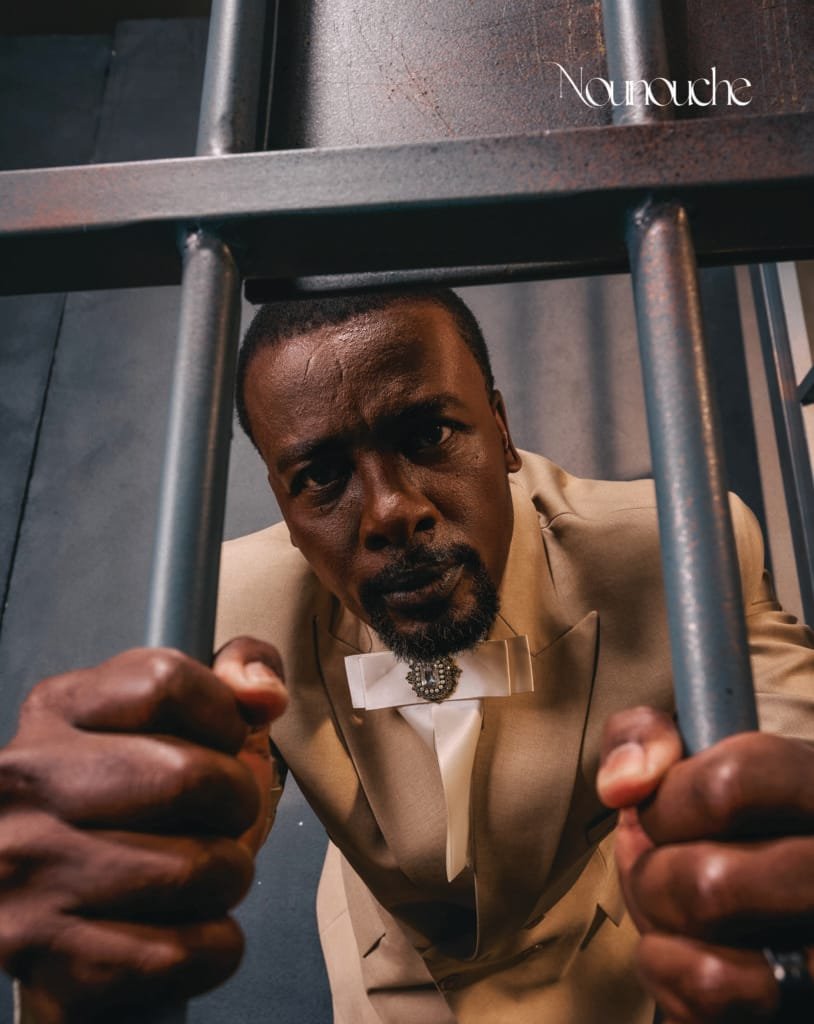
Who tells it matters.
Kgoroge is passionate about cultural specificity – the small details, instincts, language, mannerisms and emotional truths that cannot simply be researched from the outside.
“You might fall in love with it,” he says of telling a story outside your own cultural experience, “but the cultural nuances are different on how you’re going to tell that story.”
It is a philosophy that comes through strongly in Umthetho. The performances feel rooted in the people and environments they portray because the actors understand the world they are inhabiting.
For Kgoroge, authenticity isn’t a buzzword. It is craft.
Back where he belongs
After years of directing, Kgoroge admits that acting had begun to feel like a muscle he needed to exercise again.
He had even considered returning to theatre before this show came along.
Then came Moses.
And suddenly, the actor who had been contemplating a return to the stage was back in front of the camera – nervous, excited and eventually, as he puts it, “on fire.”
He credits his wife, who became his acting coach at home, with helping him find his confidence again.
It is a fitting story for an actor whose career has never been confined to one discipline.
Tony Kgoroge is not simply returning to acting. He is returning with perspective.
He has lived long enough in the industry to understand the difference between performance and truth, between a story that looks African and one that actually feels African.
And in Umthetho he has found a character that allows him to explore all of it: masculinity, love, justice, survival, family and the complicated business of being human.
The result is a performance that asks more questions than it answers.
Perhaps that is exactly the point.
Because Tony Kgoroge is not interested in giving us characters who are easy to understand.
He wants to give us people.
And people, as Umthetho reminds us, are rarely black and white.




No Comments