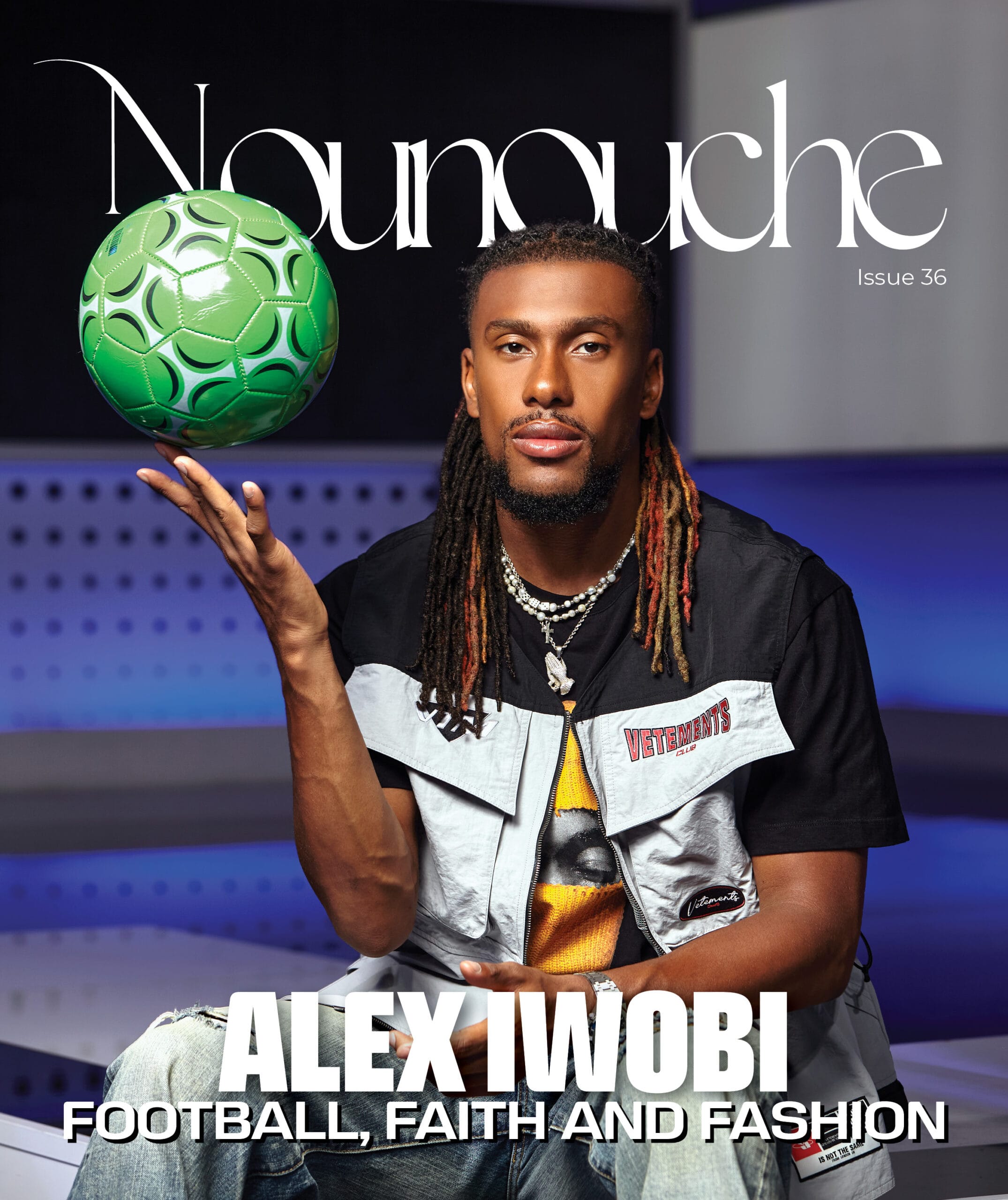
There are footballers who speak about representing their countries as though it were another fixture on the calendar. Then there is Alex Iwobi.
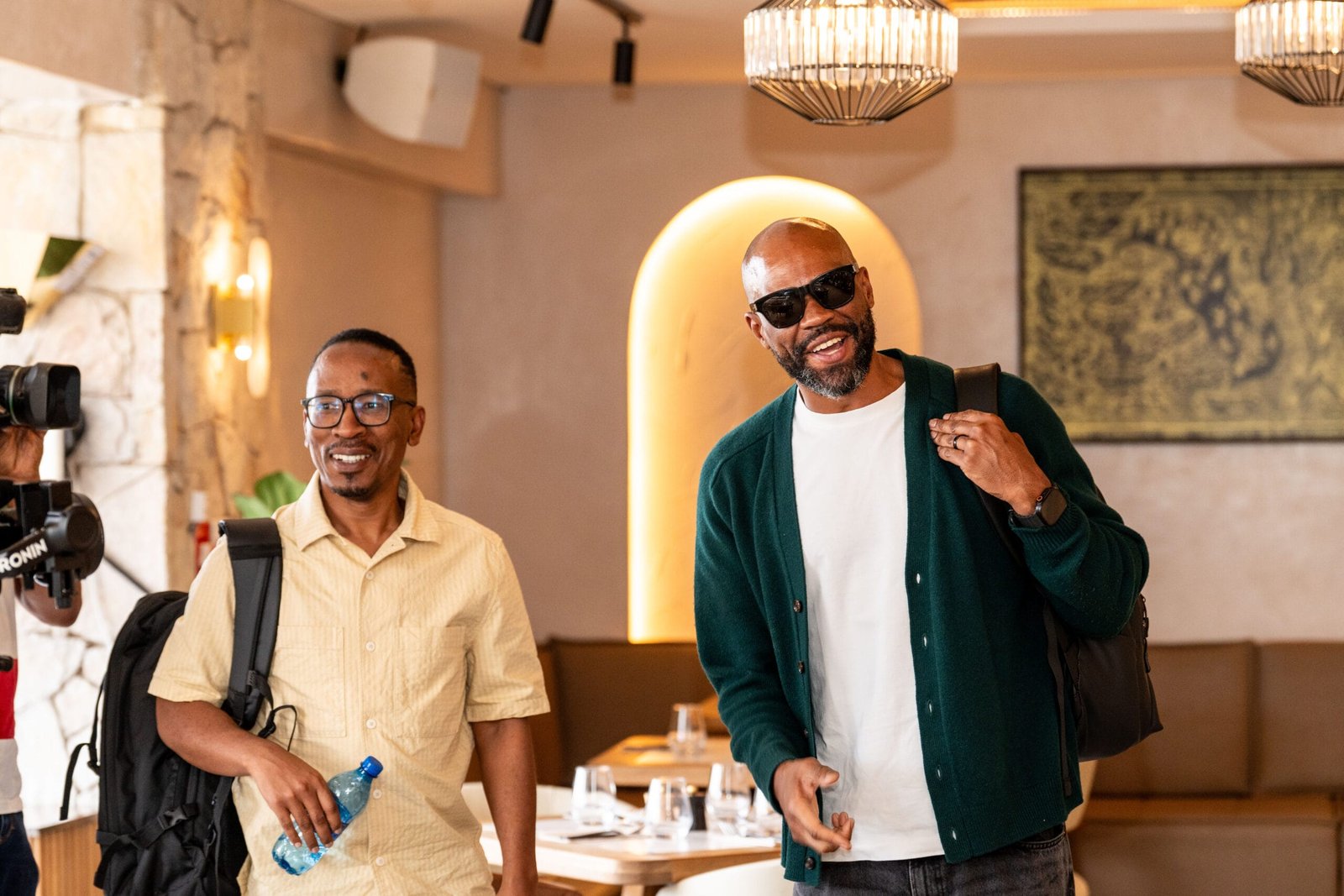
When the Fulham midfielder and Super Eagles star sits down in Johannesburg during the SuperSport World Cup campaign, there is an ease about him that mirrors the city around him. Before the cameras begin rolling, he’s laughing while learning a South African dance move, slightly hesitant at first, eventually finding the rhythm. It feels fitting.
“I feel like South Africa is such a vibe,” he says with a grin. “Because I feel like I’m a vibe, I feel like I match the South African energy.”
It’s a light-hearted opening, but beneath the charm lies something more enduring: a footballer who has built one of the Premier League’s most respected careers without ever losing sight of where he belongs.
For more than a decade, Iwobi has competed at the highest level of English football. Week after week, he performs before millions. Yet the moments that continue to move him most happen thousands of kilometres away, every time he pulls on Nigeria’s famous green jersey.
“I’ve played over a hundred times for Nigeria,” he reflects. “Every single moment has felt really special.”
He pauses, choosing his words carefully.
“Stepping onto the pitch with my brothers… with my family… it’s an honour. Every time I get called up, I appreciate it. I always want to represent my country and make Nigerians proud.”
There is no performance in the answer. No rehearsed patriotism. Just gratitude.
For players with dual nationality, international football often becomes one of the defining choices of their careers. Iwobi, born and raised in England, could easily have represented the Three Lions. Many wondered whether he would.
For him, however, there was never a dilemma.
“Not at all,” he says when asked whether he has ever questioned his decision.
“I grew up in a Nigerian household. My family is Nigerian. I feel more at home when I go back to Nigeria.”
He is careful to acknowledge the country that shaped his football.
“I’ve always got respect for England,” he says. “But Nigeria was always my calling.”
That word—calling—reveals everything.
In an era where international allegiance is often discussed through the language of opportunity, rankings and career strategy, Iwobi speaks instead about belonging. His connection to Nigeria isn’t transactional; it’s ancestral. Emotional. Inherited.
It is perhaps why his performances for the Super Eagles carry a different weight. Every appearance feels less like selection and more like fulfilment.
The conversation drifts naturally toward legacy. Having represented Nigeria on football’s grandest stages and surpassed a century of international appearances, I ask him to look back.
What moment stands above the rest?
Iwobi smiles, almost as though replaying the highlights in his mind before answering.
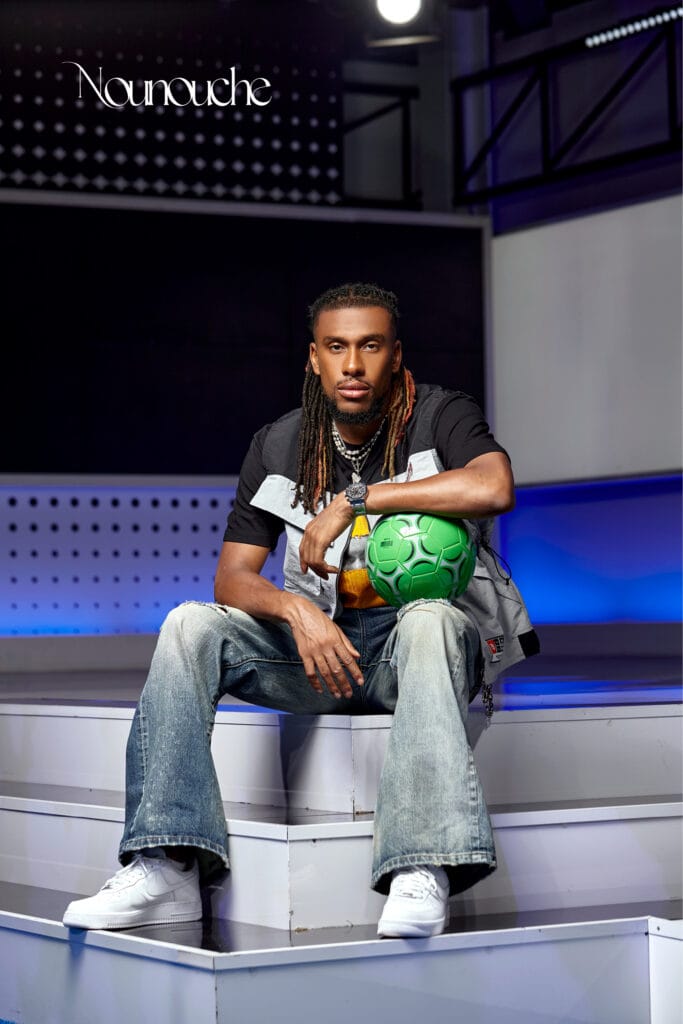
Some careers are measured by trophies. Others by statistics. Alex Iwobi’s story is measured by something quieter but infinitely more lasting: the certainty of knowing exactly where home is.
And every time he steps onto the pitch in green, that certainty follows him.
There is one memory, however, that rises above all the others.
When asked about his greatest moment in Nigerian colours, Iwobi doesn’t mention the tournaments, the milestones or even reaching more than a century of international appearances. Instead, he returns to a single goal—and two familiar faces in the stands.
“My biggest highlight would have to be playing against Zambia in a World Cup qualifier,” he says. “The reason why is because my parents were in the stadium. When I scored the winning goal, I was able to see my mum and dad celebrating.”
For a brief moment, the conversation shifts away from football altogether. It becomes about family.
Elite athletes often speak about sacrifices made in pursuit of greatness, but rarely do they describe the quiet reward of being able to give something back to the people who first believed in them. For Iwobi, watching his parents celebrate wasn’t simply another post-goal memory. It was the culmination of years of support, sacrifice and unwavering faith.
“That was amazing,” he says, smiling.
Football, after all, is rarely just about football.
Growing up, Iwobi had been one of African football’s greatest artists much closer than television screens could offer. Jay-Jay Okocha, arguably Nigeria’s most gifted playmaker and one of the continent’s greatest exports, is not simply a childhood hero. He is family.
“Very, very true,” Iwobi laughs when I ask whether the relationship is real. “He’s my mum’s younger brother.”
For many young footballers, having a legend in the family might seem like destiny written long before the first professional contract. Iwobi sees it a little differently.
“To be fair, he played a part,” he admits. “As a kid, I used to watch his games. I used to watch him train.”
But the love affair with football, he insists, existed independently of famous bloodlines.
“I always wanted to kick a ball. I always wanted to kick something, slide tackle the chair or something,” he says, laughing. “I’ve always been interested in football, whether he was playing or not.”
It is a refreshing reminder that while talent may run through families, passion cannot be inherited. It has to be discovered.
As our conversation turns to the FIFA World Cup, Africa’s resurgence becomes impossible to ignore. National teams across the continent are earning respect once reserved for football’s traditional powerhouses, forcing the world to reconsider long-held assumptions about African football.
Iwobi has noticed the shift.
“Slowly but surely,” he says.
“The nations you’ve mentioned are making us proud. They’re making Africa proud. We’ve got so many players and so much ability. It’s nice that African teams are starting to get recognised.”
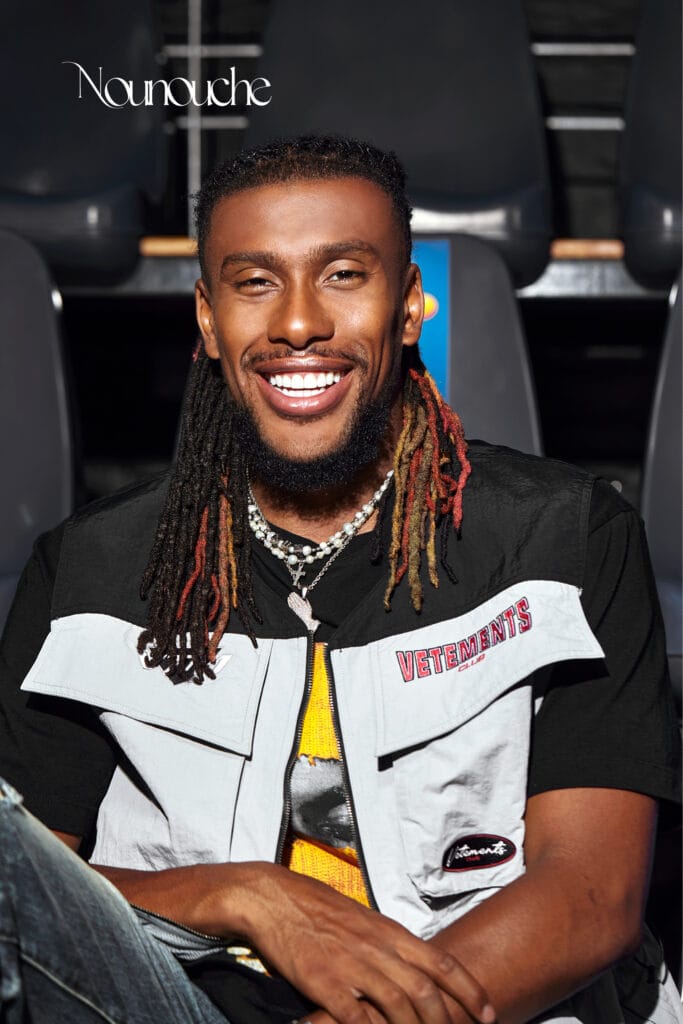
There is no triumphalism in his voice, only quiet confidence that the continent’s moment has not arrived by chance, but through years of excellence that is finally receiving global acknowledgement.
Asked which team he is backing beyond South Africa, Iwobi smiles knowingly.
“Probably England,” he says. “I grew up there and I know a lot of the players, so I’ll be supporting most of them.”
It is another reminder that identity, for Iwobi, has never been a contradiction. England shaped the footballer. Nigeria shaped the man.
When the conversation shifts to England’s selection headaches at right-back, Iwobi refuses to second-guess the manager.
“That’s a tough one to say, especially as I’m not a coach,” he says diplomatically. “But there are players who can slot in. I’ve seen Ezri Konsa play there for Aston Villa before, and you’ve got Djed Spence as well. They’ll figure something out.”
It’s a measured response, characteristic of someone who understands football from the inside. There are no sensational headlines, no sweeping criticism, just the perspective of a professional who knows how unpredictable the game can be.
For Alex Iwobi, football has always been about more than the noise that surrounds it. Beneath the Premier League spotlight, beneath the international caps and family legacy, is a man who still speaks about the game with the curiosity of the little boy who wanted to kick anything within reach – even if it happened to be a chair.
Ask Alex Iwobi about the future of Nigerian football and his answer comes without hesitation.
“Benjamin Fredericks,” he says immediately.
The Fulham midfielder lights up at the mention of the young defender, speaking less like an established international and more like an older brother eager for the world to discover someone special.
“He’s a young star. A great defender. He’s got a big career ahead of him.”
Iwobi acknowledges that injury briefly interrupted the teenager’s momentum, but his conviction never wavers.
“He just came back from injury. He’s definitely one to watch.”

For a player who has spent years navigating football’s highest levels, endorsements are rarely handed out lightly. His belief in Fredericks feels less like prediction and more like quiet certainty.
As the conversation returns to the FIFA World Cup, Iwobi speaks with the excitement of someone who still loves the game as much as he plays it.
“It’s been very exciting,” he says. “There’ve been a lot of goals, a lot of high-intensity play.”
What has captivated him most, however, is the tournament’s unpredictability.
“You never know who’s going to win. That’s what I like about it. I don’t like it when it’s one-sided and one team is way better than the other. I like that it’s interesting for the fans to watch.”
There is an unmistakable appreciation for football as spectacle—for the drama that unfolds when reputations mean little once the whistle blows.
Like millions across Africa, Iwobi’s earliest World Cup memories are stitched together through moments rather than complete tournaments. One, in particular, has never left him: Nigeria’s heartbreaking exit in 2010, when Yakubu Aiyegbeni missed the chance that might have rewritten the nation’s history.
“That’s probably the World Cup I watched the most,” he recalls.
His voice carries no criticism.
“Yakubu is a legend. I can’t doubt what he’s done.”
It is the response of someone who understands the cruel mathematics of football better than most. Careers are often remembered through isolated moments, but those who have lived them know that greatness can never be reduced to a single missed opportunity.
After more than a decade in the Premier League, I ask Iwobi what the world’s most demanding domestic competition has taught him—not about football, but about himself.
The answer arrives almost instinctively.
“It’s taught me that you have to be on top of your game, even outside the pitch.”
Professionalism, he explains, isn’t confined to the ninety minutes supporters see every weekend.
“You train all week for those ninety minutes. Every day you have to be professional.”
It is perhaps the simplest explanation of elite football’s hidden reality. The match is merely the performance. Everything else—the recovery sessions, nutrition, tactical meetings, gym work, travel and discipline—forms the unseen architecture beneath it.

When I ask what supporters rarely understand about a footballer’s life, Iwobi’s expression softens.
“The sacrifices we have to make,” he says.
He speaks about long stretches away from family. About missing Christmas celebrations and milestones that most people take for granted. Even the off-season, often imagined as endless luxury, passes quickly before preparations begin again.
“Obviously this is my holiday period,” he says. “But holidays are short.”
He doesn’t say it with self-pity. There is no complaint in his voice—only perspective.
“Some people understand,” he says. “But most don’t, because they only see what happens during the ninety minutes.”
Perhaps that is the paradox of modern football. Millions know Alex Iwobi, the Premier League midfielder. Far fewer know Alex Iwobi, the son who treasures seeing his parents celebrate from the stands, the nephew who grew up watching Jay-Jay Okocha train, or the professional who measures success as much by discipline as by goals.
The ninety minutes are only the visible chapter.
The rest of the story is written long before kick-off.
As our conversation begins to wind down, I ask a question every aspiring footballer eventually wonders: what separates a good midfielder from a great one?
Iwobi doesn’t reach for complicated tactical language.
“It’s about being comfortable on the ball,” he says. “And having a lot of stamina.”
The simplicity is deceptive.
“So much goes through the middle. You have to be comfortable receiving the ball, and you have to be intense. You’ve got to be able to run around for ninety minutes.”
It is the philosophy of someone who understands that football’s most influential players often make the hardest things appear effortless.
When asked which midfielder currently excites him the most, his answer may surprise some.
“My favourite right now is Rayan Cherki.”
The newly minted Manchester City midfielder, fresh from his move to the Premier League, represents the kind of fearless creativity Iwobi admires.
“He likes to make things happen,” he says. “He wants the ball. He does fancy tricks. He’s definitely someone I find entertaining to watch.”
For a player often celebrated for his own technical ability, it is telling that Iwobi values imagination as much as efficiency.
Yet football, as he has repeatedly reminded me throughout our conversation, is only part of the story.
The emotional demands of the game can be just as taxing as the physical ones. I ask how he resets after a disappointing performance, a question every elite athlete must answer repeatedly across a career.
His response has nothing to do with sports psychology or recovery protocols.
“My family and my friends,” he says without hesitation.
“I’ve always had a great support system. If I ever need to switch off, I can literally just chill with them, talk, have a laugh. It motivates me to go again.”
Then comes a sentence that feels like the quiet heartbeat of his career.
“Without my support system, I wouldn’t be where I am today.”
In an era that often celebrates individual brilliance, Iwobi gently reminds us that even football’s brightest stars are carried by communities long before stadiums begin chanting their names.

Faith, too, remains one of those foundations.
Across global football, a growing number of players have become increasingly open about their relationship with God, speaking about faith with the same conviction they once reserved only for trophies. I ask Iwobi what role it has played in his own journey.
“Without God, I wouldn’t be where I am today.”
The answer comes instantly.
“I’m grateful He’s given me the opportunity and the tools to be where I am today.”
He speaks warmly about his parents, whose faith continues to shape his own.
“My mum and dad are always praying for me. They’re very, very religious. They go to church probably twice a week.”
Iwobi smiles as he glances at the prayer hands he carries with him.
“I’m always praying as much as I can.”
Then, with a refreshing honesty rarely heard from elite athletes, he admits that football’s relentless schedule has made regular church attendance difficult.
“I haven’t been in a while. Football isn’t an excuse,” he says. “I do pray, but I need to go to church a lot more.”
There is humility in the admission—an acknowledgement that faith, like football, is a journey rather than a destination.
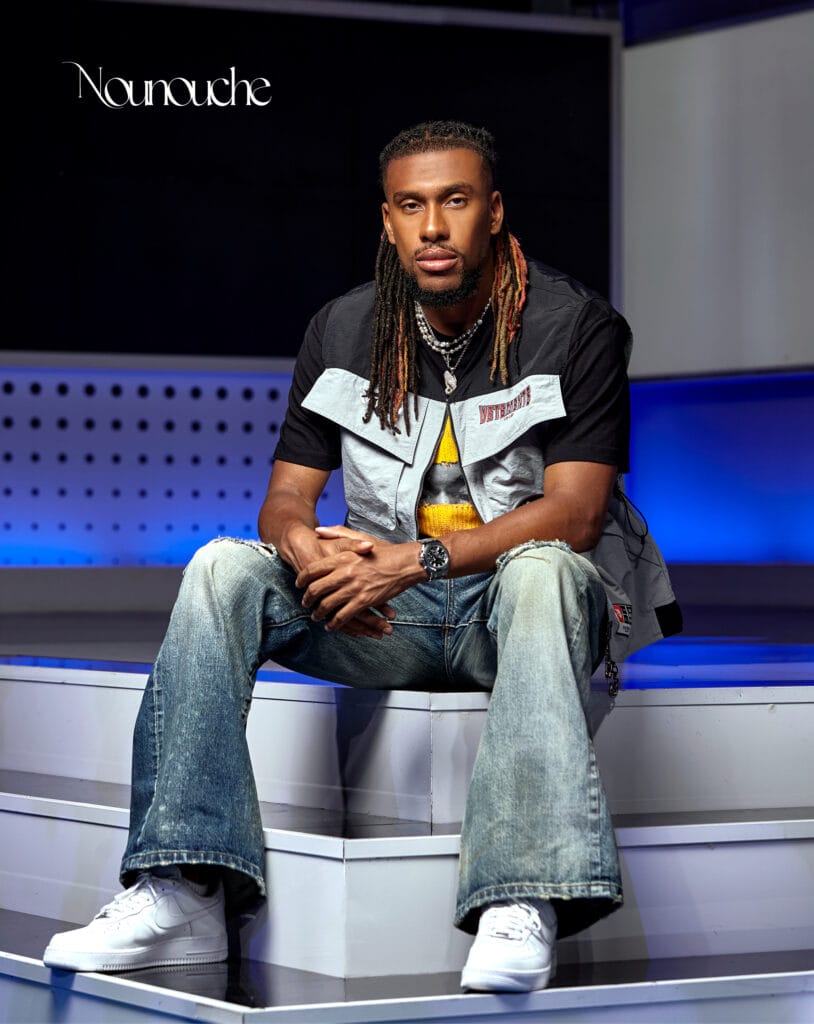
As we reach the final question, I ask him how he hopes people will remember Alex Iwobi decades from now.
Not the footballer. Not the musician or the fashion enthusiast.
Simply the man.
He pauses.
“A lot of people know me as Alex the footballer,” he says. “I’m trying to show people there’s more to me.”
Then he offers a sentence that feels destined to outlive every statistic, every goal and every appearance.
“I’m human first.”
He lets the words settle before continuing.
“I can do football, music and charity work, but I’m human first.”
It is an unexpectedly profound ending to a conversation that began with dance moves and laughter in Johannesburg.
For all the conversations about tactics, international football, Premier League longevity and family legacy, perhaps that is Alex Iwobi’s greatest message.
Before the applause. Before the expectations. Before the headlines.
There is simply a man trying to honour his family, his faith, his country and the game he has loved since he was a little boy kicking anything that crossed his path.
Everything else is just football.
As the formal conversation begins to dissolve, Alex Iwobi becomes noticeably more relaxed.
There is an easy humour about him, the kind that explains why teammates, photographers and interviewers seem to gravitate towards him. The footballer gives way to the man.
So, naturally, the conversation drifts beyond football.
Would he ever consider modelling?
He laughs. “I don’t mind.”
If the opportunity presents itself, he says, he’d happily step in front of the camera.
“If any modelling agencies or shoots come about, I’ll happily take the opportunity.”

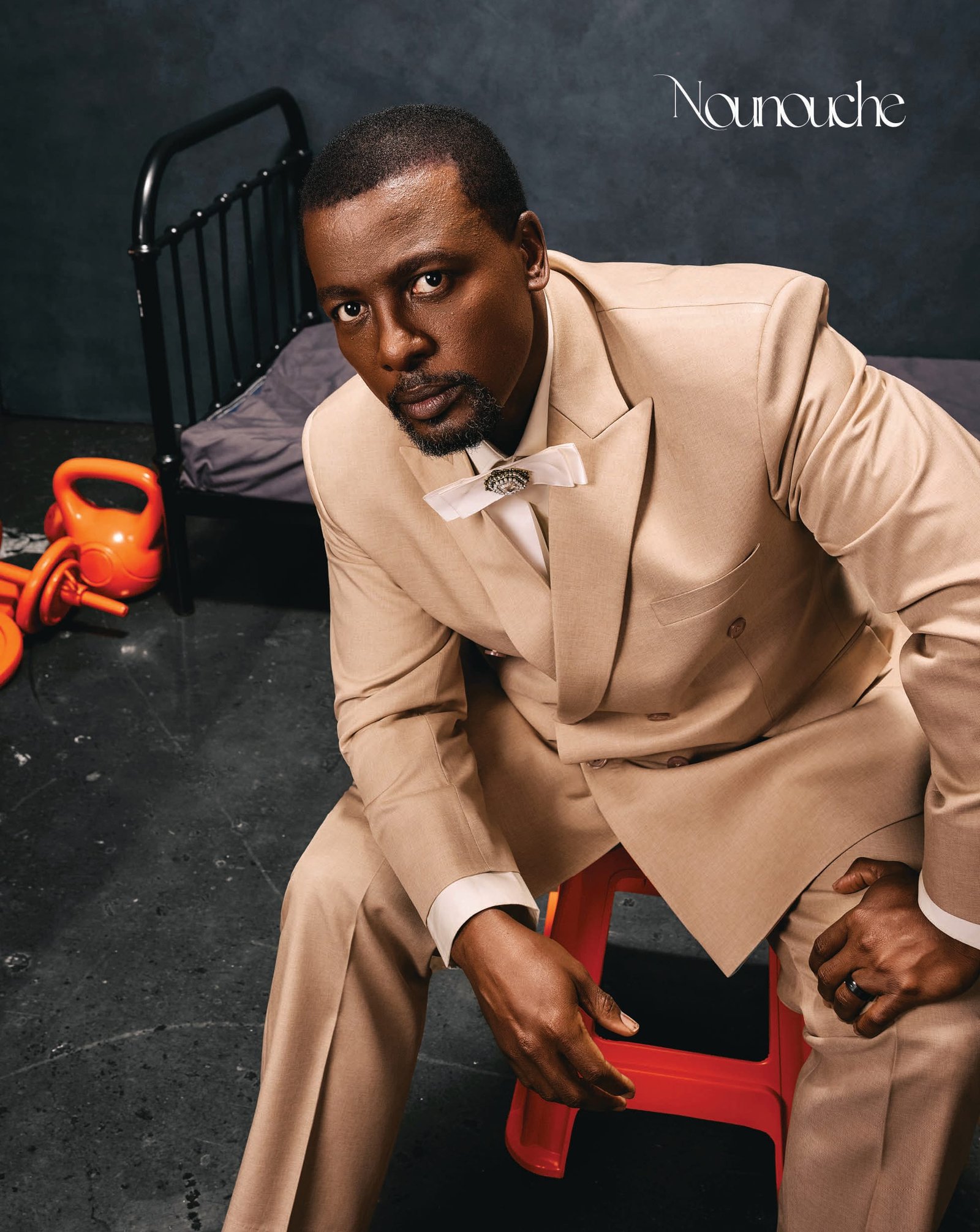
It isn’t difficult to imagine. Iwobi has quietly become one of football’s most stylish dressers, blending luxury fashion with an effortless streetwear sensibility that feels authentic rather than curated.
I ask whether he works with a stylist.
“Occasionally,” he says. “Especially when there are shoots and everything is last minute.”
But most days, the look is entirely his own.
“Ninety per cent of the time, it’s literally just me.”
He shrugs with a smile.
“It seems to work.”
It does.
There is a confidence in his style that mirrors the way he plays football—not loud for the sake of attention, but expressive enough to reveal personality.
As the cameras stop rolling, one thing becomes abundantly clear.
Alex Iwobi belongs to a generation of African footballers redefining what success looks like. Comfortable speaking about faith as he is fashion. As passionate about family as he is football. Proudly Nigerian while embracing the experiences that shaped him in England.
He carries the expectations of a nation with remarkable composure, yet never allows them to eclipse the person behind the profession.
Throughout our conversation, he spoke about his parents before his trophies, his support system before his achievements, and his faith before his talent.
And when asked how he hopes the world will remember him, his answer lingered longer than any discussion about tactics or titles.
“I’m human first.”
Perhaps that is why Alex Iwobi resonates so deeply with a generation looking for more than sporting heroes. In a culture that often reduces athletes to statistics and performances, he offers something increasingly rare: authenticity.
Football may have introduced him to the world.
But it is the man behind it who leaves the lasting impression.


No Comments