
Inside the quiet power, reinvention, and unshakeable faith of one of South Africa’s most enduring style and screen icons.
By Bonnie Meslane
On a late summer afternoon, the Essie Apparel studio hums with a kind of disciplined serenity. Rolls of fabric stand like sentinels against the walls; soft light slips across the cutting tables; and the smell of steam from a nearby iron lingers in the air. In this space, half atelier, half spiritual sanctuary – celebrated actress and fashion designer Enhle Mbali Mlotshwa greets me with the calm of someone who has learned to live deliberately.
I first met Enhle in 2013, when I worked at Soulistic Music. She was stylish, warm, effortlessly personable. Even in those quiet, unhurried days at the office, where she would come and visit, something about her shimmered. Stardom was not something she performed. It was something she inhabited.
More than a decade later, I meet her again, this time not at a music label’s headquarters, but in the sun‑drenched silence of her Essie Apparel studio. The space is unmistakably hers: textured, intentional, quietly powerful. Much like the woman herself. Today, Enhle is distilled. Clear. Certain. A woman who has endured public storms with private grace, and emerged not unmarked but undeniably transformed.

THE MAKING OF A WOMAN WHO REFUSES TO BREAK
Enhle’s early life was defined by contrasts that would later inform both her artistry and her poise. She grew up in Soweto, raised by her mother and grandmother. Her father, a handsome man with his share of human flaws, belonged to an institution of religion so influential that her mother felt compelled to shield her from it. Yet he also possessed tangible wealth in an era when affluence among Black South Africans was rare: Bentleys, Rolls Royces – symbols of a world both distant and intoxicating.
“I loved my dad and all his flaws” she reflects. “He really did try to be present for me, even if imperfectly.” She recalls the small, tender rituals: visits to her grandmother’s house with snacks secretly tucked away – yellow Tropika, NikNaks, Simba chips – gestures that became lifelong memories. Even the fleeting rides in his luxury cars carried the awe of a child glimpsing a life far beyond the ordinary. It was a childhood lived between worlds: the grounded, protective love of her mother, and the lavish, adventurous presence of her father.
These dualities – structure and freedom, care and unpredictability – left their mark. They taught her early lessons in observation, discernment, and grace, preparing her for a life in the public eye without compromising the private truths that would sustain her.
South Africa has watched Enhle for much of her adult life. The nation has studied her, celebrated her, scrutinised her. It has witnessed her triumphs and her wounds, often in real time. Yet what few understand is that her evolution has not been an act of reinvention. It has been a return.
“There were years when I felt like I was constantly fighting, fighting for myself, for my voice, for my name,” she says, moving a garment aside with gentle precision. “Eventually you realise you don’t need to fight what is beneath you. You only fight for what you’re called to.”
Her transformation was not a dramatic rebirth, but a slow unfurling. A dawn. A deliberate retreat from noise, not out of fear, but out of sovereignty. Out of the knowledge that peace is not passive; it is curated. The woman before me is unburdened. Not untouched by pain, but unruled by it.
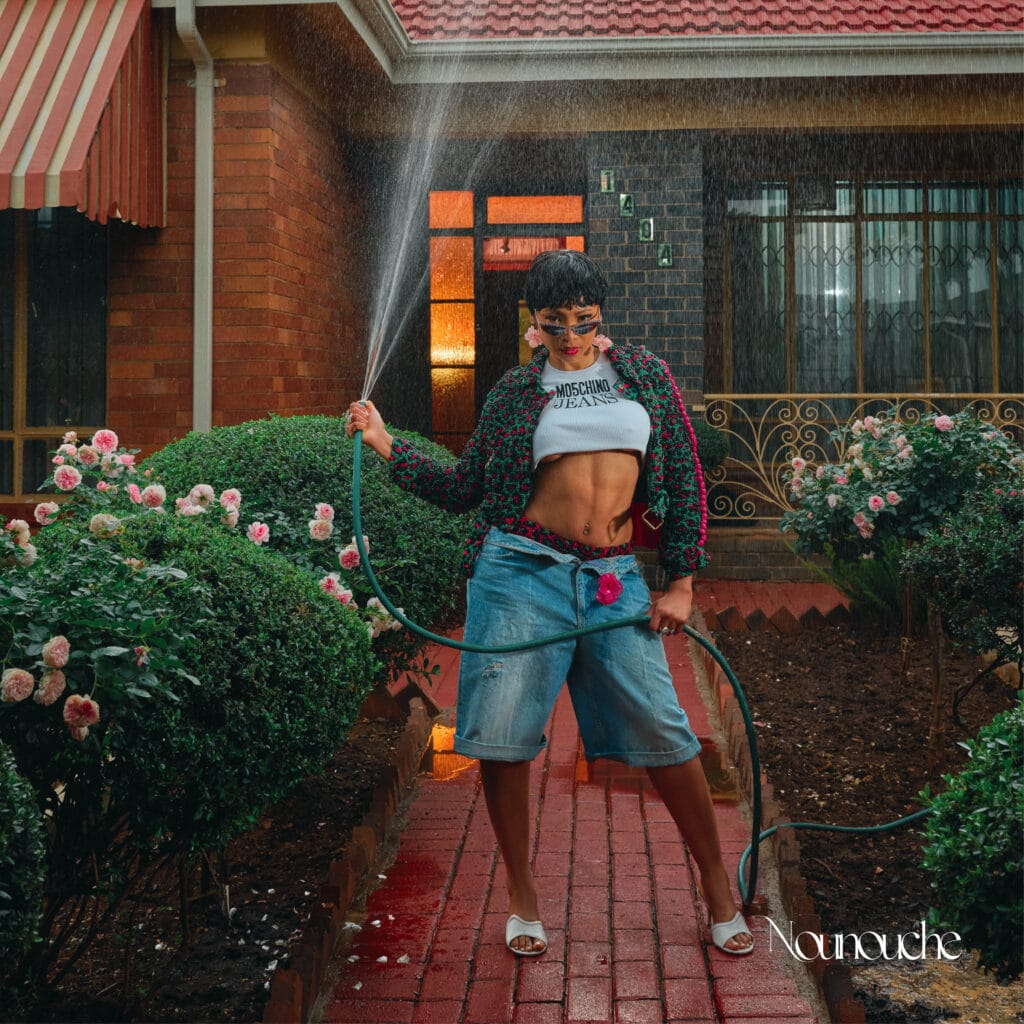
THE QUIET LUXURY OF SELF-POSSESSION
Essie Apparel is more than a fashion label. It is her thesis on womanhood. A study in resilience, elegance, and reclamation. Each silhouette – structured yet fluid, powerful yet gentle, reflects a chapter of her evolution.
“Clothing should feel like protection,” she tells me. “But it should also feel like possibility.”
Her words linger, soft but weighted. Here, she is both architect and artist, designing garments that hold a woman’s becoming. The brand is not performative, nor is it celebrity gloss. It is meticulous craft. A quiet revolution in fabric. Her presence in the studio shifts the energy around her. She speaks with conviction. She embodies a confidence that is not loud, only true.
Enhle has been designing clothes since she was a teenager, with singer KB Motsilanyane as her first client. Her dedication to craft and self-possession runs deep, a lesson she shares with anyone willing to listen. We saw her dress Beyonce a few years ago.
Reflecting on her journey, Enhle offers wisdom not just for the young girl she once was, but for anyone navigating ambition, identity, and love.
“You have to understand what you’re doing,” she emphasizes. “It’s important to hire a team to expand, but it’s equally important to put in the sweat and blood yourself. Even princesses and queens – work to get where they need to be. Sharpen your artillery before you go to war.”
Fame, she reflects, has been an unlikely teacher. It has reminded her that she is, at heart, the girl next door: unpretentious, grounded, and at peace with her own rhythms. It has taught her to embrace silent moments, to discern intentions in others, and to navigate life with a sharpened spiritual intuition.
Her creative choices are never superficial; each collection carries a deeper message. The recent bridal capsule, she explains, is less a fashion statement than a declaration of faith in love and the institution of marriage. “I’ve always loved love,” she says. “Life has taught me that you plan, but God says, ‘You’re cute.’ That capsule encapsulates: ‘I’m going to do it again.’ I would definitely get married again – wiser, smarter, and emotionally whole.”
Healing, for Enhle, has been transformative. She has learned that one cannot give what is personal too freely; boundaries are essential. The relationship she cherishes now is private and protected. Love, she asserts, is not about proving happiness to the world – it is about cultivating a life and a heart capable of holding it, deeply and deliberately.
For Enhle, love has never been a question of desire,it has always been a question of alignment. Speaking candidly, she reflects on the realities Black women face in a world that too often asks them to endure and minimize themselves.
“Black women,” she says, “no one is out there to save you. Very few people care about you, and those who do are often too scared to be your saviour. You are your own prince. You’re the only person who’s going to save you.”
Her insight is profound: the strength of Black women has historically been celebrated, yet it has also been weaponized against them. Enhle rejects the idea that survival requires hardness. Instead, she embraces the delicate balance between strength and softness, independence and vulnerability. “You deserve to be loved correctly. You deserve to love correctly. You deserve to be that baby,” she says. “When you are with a partner who is balanced, you allow yourself to be feminine, and you allow someone to be masculine – if they’re doing it correctly. That is the beauty of healing.”
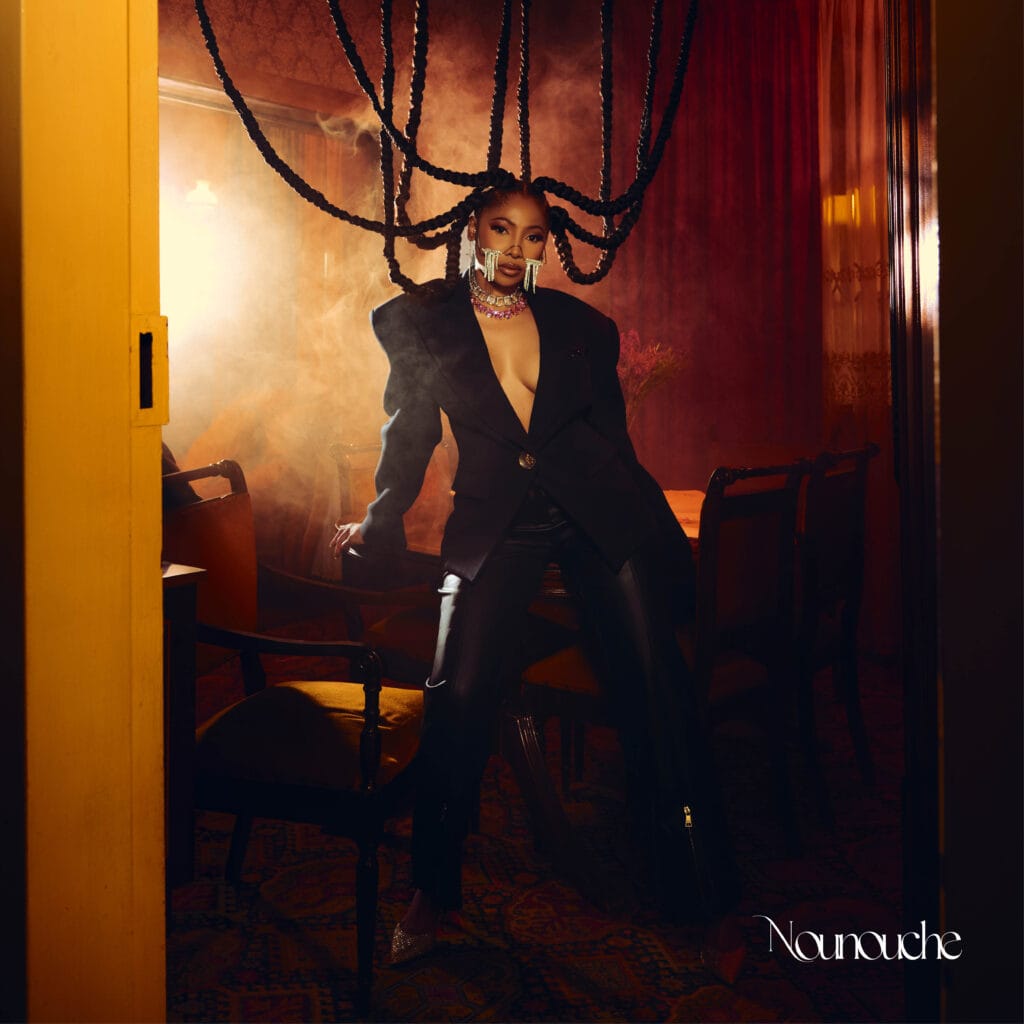
Enhle’s philosophy of love extends seamlessly into her role as a mother. “I know because my son wrote me a Grade 7 letter last year, and in that letter I realized how grown these children are,” she reflects, a quiet pride threading her voice.
Parenting, for her, has always been deliberate – a balance between love, respect, and guidance. She has created boundaries that protect her children’s world while nurturing their independence. Daily rituals; movie nights, pizza Fridays, bedtime games, anchor the family in love and joy. Conversations range from practical life lessons to spiritual reflection, and she celebrates the individuality of her children without imposing her own ambitions. In teaching autonomy, she also models resilience, discernment, and self-possession, preparing her children for lives rich in opportunity and grounded in love.
THE WOMAN BEHIND THE MYTH
For years, South Africa has projected narratives onto Enhle – some accurate, many imagined, most incomplete. Today, she does not seek to correct them. She seeks to expand beyond them.
She is a mother raising children anchored in clarity and compassion.
An actress reclaiming the nuance of her craft.
A designer crafting an African luxury legacy.
A spiritual woman whose faith is not ornamental but essential.
A survivor who refuses to reduce her story to survival.
“I’m learning to live in the fullness of who I am,” she says. “And I’m learning to enjoy it.”
It is the simplicity of the statement that reveals its magnitude.
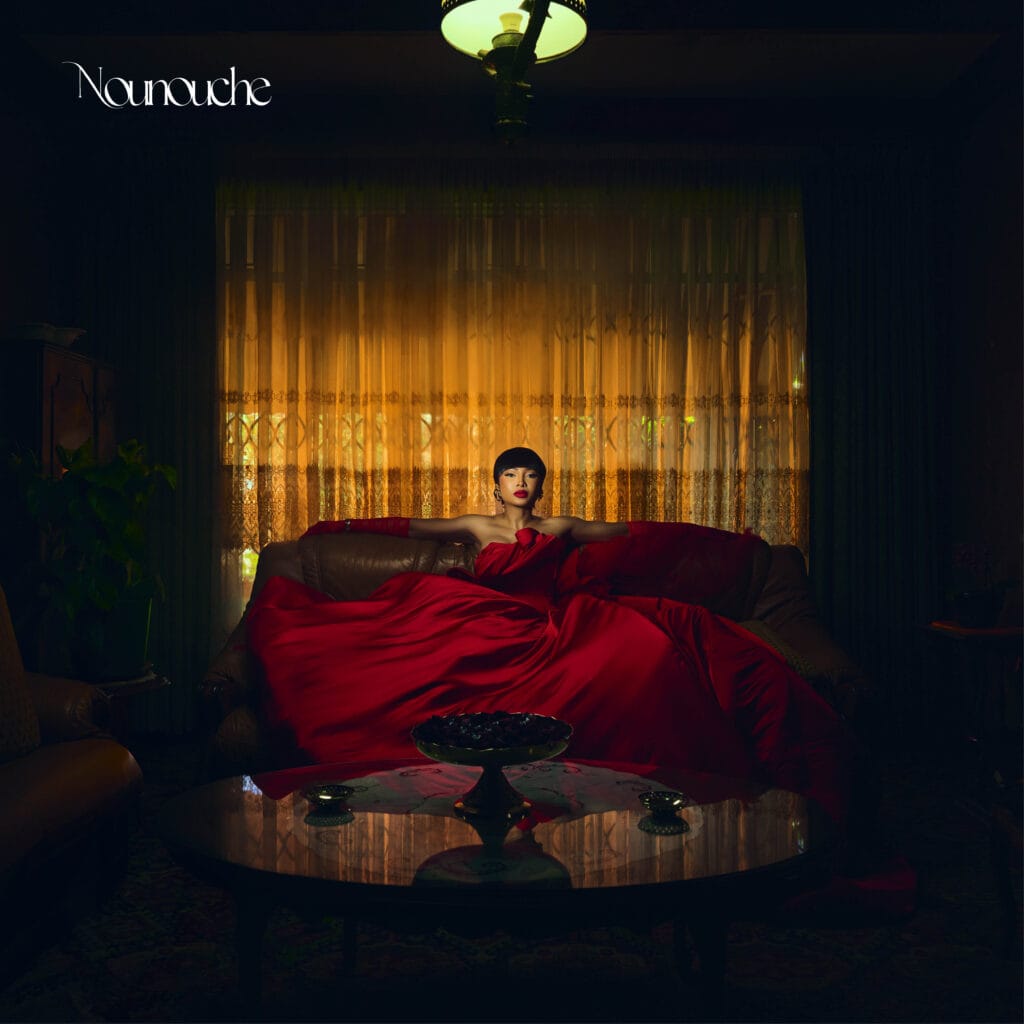
ESSIE APPAREL: A SANCTUARY OF CRAFT AND CONNECTION
As our conversation winds down, the Essie Apparel studio returns to its quiet rhythm. Rolls of fabric wait patiently, assistants move with discreet efficiency, and sunlight continues to illuminate the space, casting everything in a warm glow.
“So Essie Apparel right now is found in our gallery, which is exactly where we are today,” she explains. “It’s personal appointments, but if you would like to order, you are more than welcome. Our social media is open to that. We usually do one-on-one sessions here; we have clients who walk in, and we carve out private time for them. If they prefer champagne, we have it. If they like coffee, we have that. We really just create a capsule, and what we’ve been doing more than anything is rearranging people’s closets. Which I’m not complaining about – it’s a wonderful clientele, and it works perfectly. So let’s do this, and next year we’ll be available.”
In this space, everything is intentional: her craft, her love, her motherhood, her faith, her vision. It is here, in these quiet, exacting details, that the world can witness the full measure of Enhle Mbali Mlotshwa. Not rebranded. Not reintroduced. Reclaimed. And in doing so, she reminds us that true elegance and true power resides in alignment with oneself.
She is simply and powerfully herself.
When I step out of her Wynberg sanctuary, I leave with the unmistakable sense that the world is not meeting a new Enhle Mbali Mlotshwa. It is finally meeting the real one.
And that may be her most extraordinary role yet


Pingback: Enhle Mbali reclaims life and love