
There is something quietly radical about the way Mmule Setati speaks about food. Not as spectacle, nor as performance, but as memory, inheritance, and, most importantly, as connection. In an era where culinary culture is often filtered through perfection and distance, Setati has built something far more intimate – a living, breathing ecosystem she calls Feed My Tribe.
Born between Soweto and Randfontein, her story does not begin in the kitchen, but in ambition, in reinvention, in survival. Before she became synonymous with the kind of aspirational home cooking that feels both elevated and deeply familiar, Setati was immersed in the sharp, strategic world of public relations. Later, she would channel that same precision into building a juice distribution business that quietly scaled across provinces, landing on shelves in major retailers and feeding a different kind of demand.
Then, like so many stories reshaped by the global rupture of COVID-19 pandemic, everything paused.
What followed was not a collapse, but a recalibration.
“Food has always been in my life,” she says – not as a trend, but as a constant. Yet it was in the stillness of lockdown, under the weight of uncertainty and a deeply personal moment within her family, that the kitchen transformed. It became something softer, more urgent. A place of healing.
And from that return, Feed My Tribe found its voice.
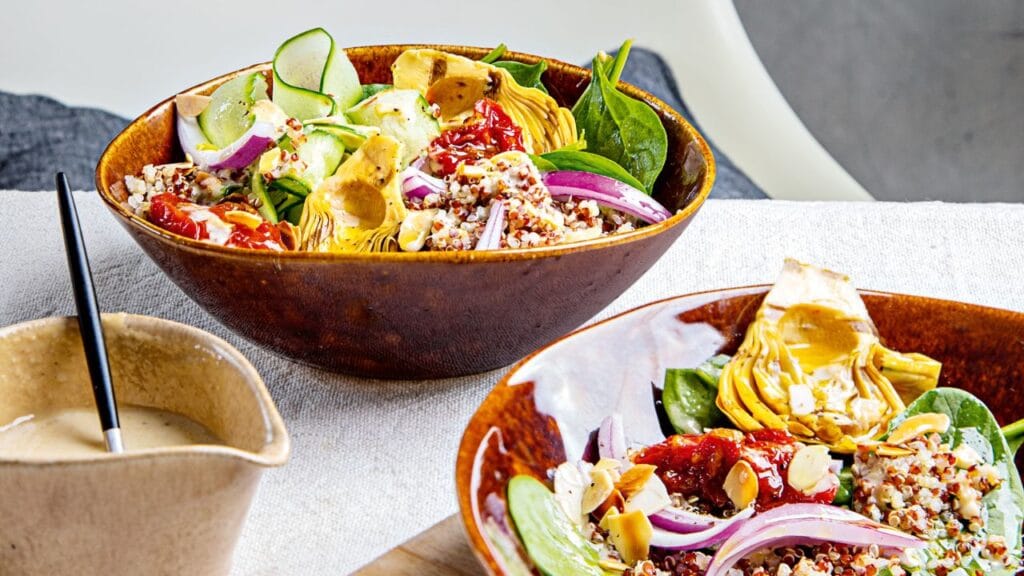
What began as a simple digital archive, a repository for the recipes friends would request after leaving her table, evolved into something far more expansive. During lockdown, when anxiety was high and domestic rhythms were suddenly disrupted, Setati noticed a quiet crisis unfolding in homes: people, particularly women navigating new domestic spaces, did not know how to cook. The ease of takeaways had vanished. The kitchen, once avoidable, became unavoidable.
So she responded with clarity and care.
Feed My Tribe became a reference point, a place where cream could be made from scratch, where bread was no longer intimidating, where the act of cooking was stripped of its elitism and returned to something accessible, even beautiful. “I made it look modern, made it look sexy, made it look relatable,” she explains, with the kind of intention that feels less like branding and more like cultural intervention.
Because what Setati understands, instinctively, almost – is that aspiration without accessibility is alienating. And so she speaks the language of her audience as one would across a kitchen counter: directly, warmly, without pretence.
As the world reopened, so too did the boundaries of her brand. The digital “tribe” materialised into physical spaces, booking classes, shared tables, strangers-turned-family. The name she had once chosen deliberately, distancing the work from her own identity, began to carry its own weight. It was no longer just a platform. It was a community.
And yet, nothing about her ascent has been accidental.
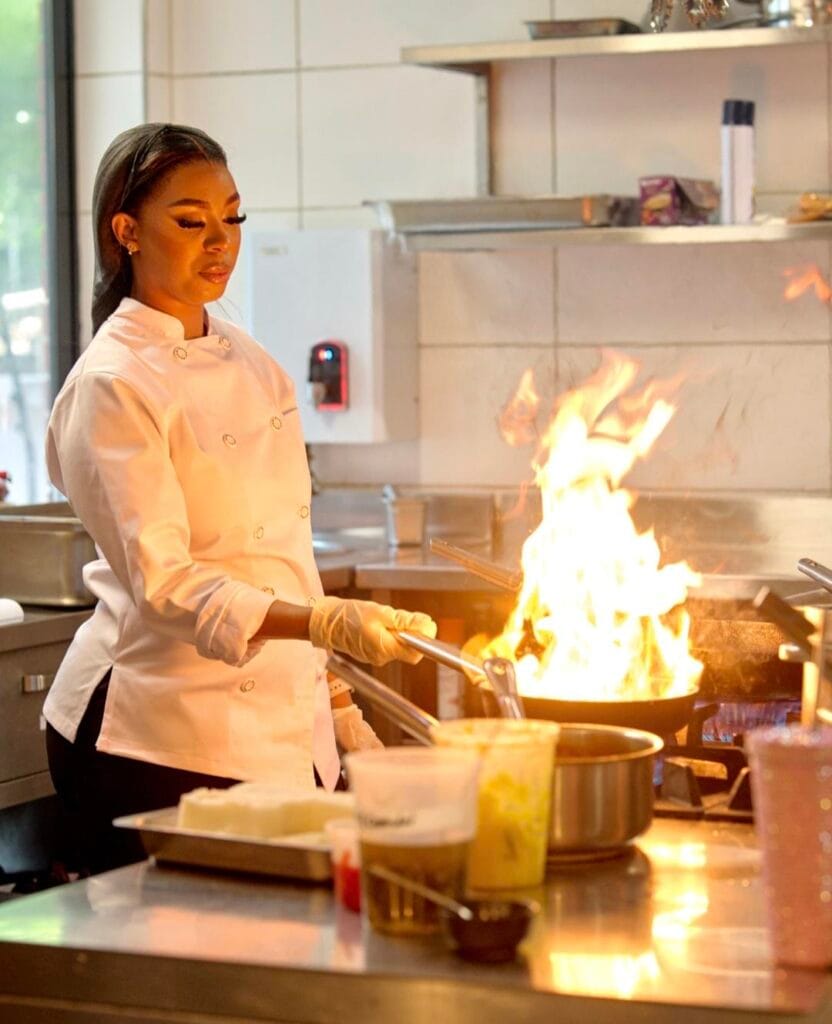
Setati is meticulous. Strategic. The kind of woman who sits in bookstores like Exclusive Books not to browse, but to study, analysing cookbooks, tracing the work of editors and photographers, mapping an industry before stepping into it. Her first cookbook was not a stroke of luck, but the manifestation of a five-year plan drafted in the aftermath of loss. Vision, in her world, is both intuitive and engineered.
So when television came calling, in the form of Ready Steady Cook South Africa, it arrived as both surprise and inevitability. What she encountered there was a different kind of kitchen: faster, louder, more unforgiving. Meals conjured in minutes from unfamiliar ingredients. No time for hesitation. No space for doubt.
But it was not the pressure that stayed with her. It was the proximity to others – to knowledge, to skill, to possibility. “My world became open immediately,” she says. Growth, for Setati, is not solitary. It is collective.
This ethos – of carrying others while moving forward, is perhaps the most defining thread in her work. It is what transforms her story from one of personal success into something more resonant, more necessary. When she speaks to young Black women, her message is not softened by platitudes. It is direct, almost urgent: be ready to pivot, refuse fear, and recognise that where you come from is not a limitation, but an asset.
“Your culture is a currency,” she insists.
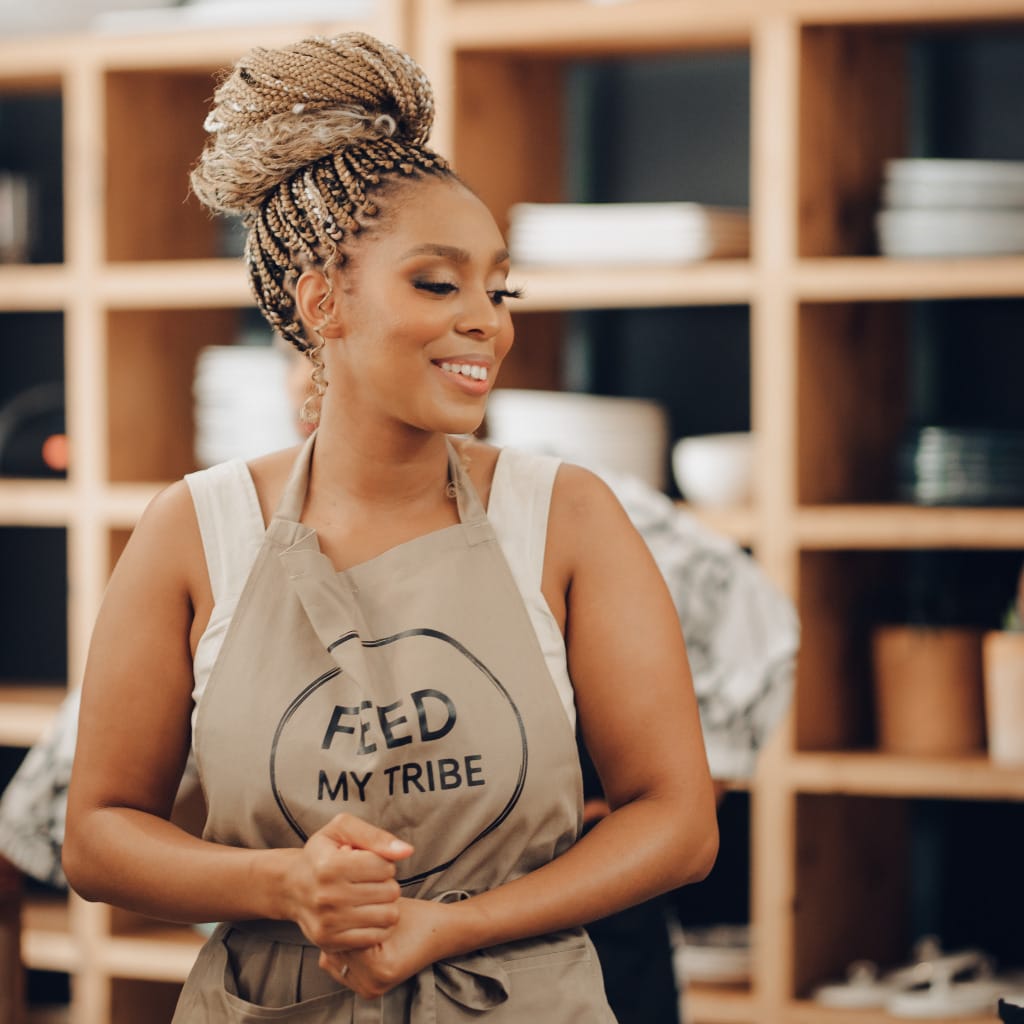
It is a sentiment rooted in lineage. In the quiet acknowledgement of the women who came before her, those who cooked, who nurtured, who sustained, but were never afforded the language or the space to turn that knowledge into enterprise. “You are carrying a hundred women behind you,” her father once told her. And in many ways, Feed My Tribe feels like an answer to that inheritance, a way of honouring it, expanding it, and giving it form.
Today, Setati stands at another threshold. A second cookbook is already in motion. Recipes are being written, tested, refined. And beyond the page, a new concept is taking shape: The Stella Table, a supper club named after her grandmother. It is envisioned not just as a dining experience, but as a deliberate return to connection, an invitation to sit, to share, to encounter the unexpected.
Because if there is a through-line in everything she builds, it is this: food is never just food.
It is a bridge. A memory. A language.
And in the hands of Mmule Setati, it becomes something even more profound, a way of feeding not just the body, but the spaces between people.




No Comments